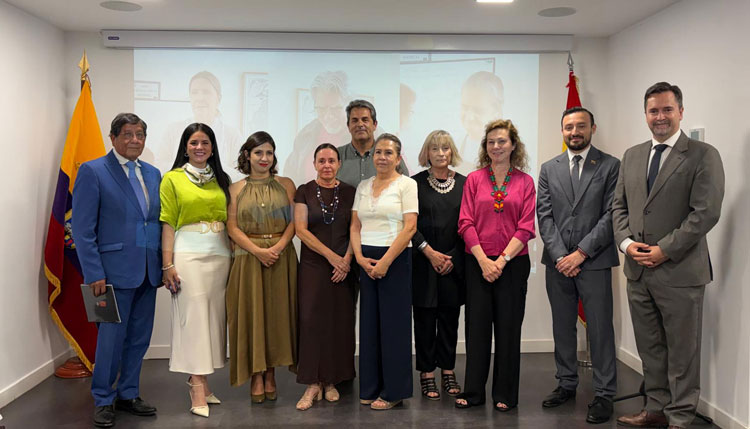
The Ecuadorian Cultural Center in Madrid (General Oráa Street, 64) inaugurated the exhibition Gráfica Coral (Coral Graphics), a project born from the artistic dialogue between Ecuador and Spain based on contemporary practices of engraving, word, and artist’s book.
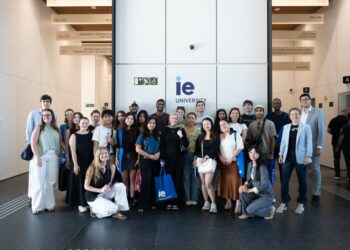
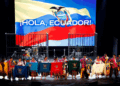
The opening brought together artists, academic representatives, cultural managers, and special guests in a meeting space around a proposal that explores memory, image, and collective creation from multiple voices and sensitivities.
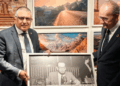
The inaugural event of this exhibition, which will be on display until June 21, included a conversation with some of the project’s protagonists: Marta Aguilar Moreno, Full Professor at the Faculty of Fine Arts of the Complutense University of Madrid and co-director of the proposal; Paulina Guarderas, curator of the exhibition and member of the Estampería Quiteña Foundation; Fernando Calles de los Mozos, head of the Development Cooperation and Volunteering Section of the Complutense University of Madrid, and Irene Gavilanes, Academic Director of the Graphic and Visual Design Career at the University of the Americas (UDLA) and director of the Estampería Quiteña Foundation.
During the dialogue, participants reflected on the origin and scope of the exhibition, which emerged within the framework of the fifth edition of the Artist Book Project “Claroscuro 2024,” promoted by the Estampería Quiteña Foundation, a reference institution in the field of contemporary Ecuadorian graphics.
As a precursor to the project, the development of the theoretical-practical workshop “Thinking the Book,” led by Marta Aguilar Moreno, was recalled, thanks to the collaboration between the Embassy of Spain in Ecuador and the Estampería Quiteña Foundation.
During a week of work, eighteen artists participated in the creation of a prototype of an artist’s book based on personal materials provided by each participant – intimate files, memories, objects, and references – which gave rise to a shared symbolic universe where concepts such as ancestors, female lineages, resistance, childhood, memory, seeds, healing, or absence were constructing the conceptual fabric of the work.