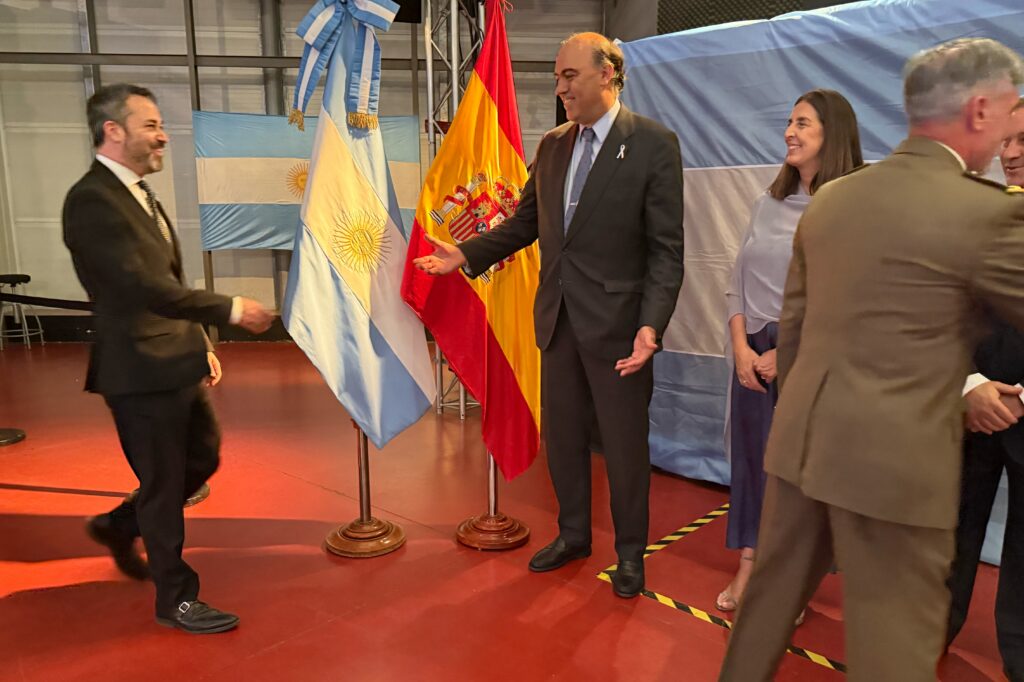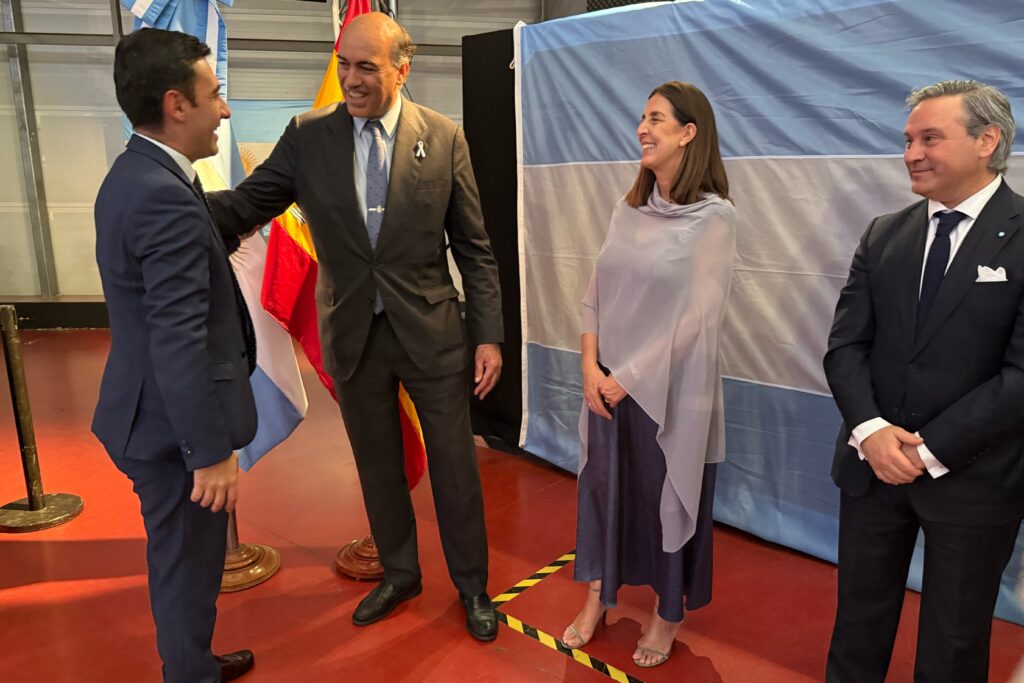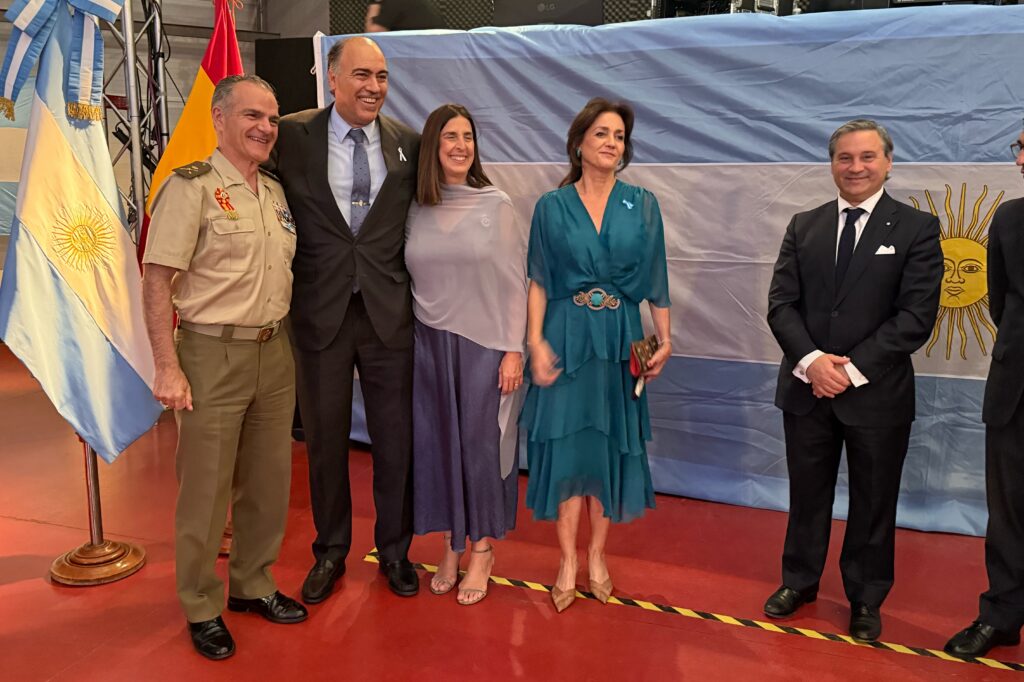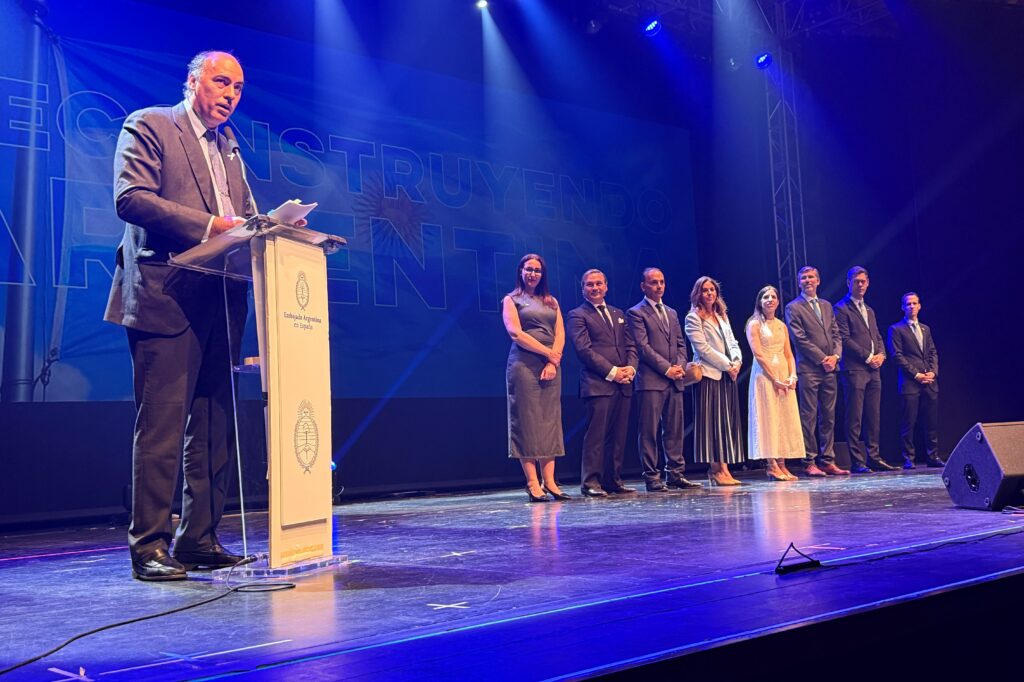
For the second consecutive year, the macroeconomic data allowed the Argentine ambassador to Spain, Wenceslao Bunge Saravia, to show moderate optimism regarding the growth of his country during the reception he held on Monday to commemorate the 216th anniversary of the May Revolution of 2010.
The ambassador compared that foundational moment of the Argentine Republic with the current one by stating that Javier Milei’s government “is made up of true brave individuals who decided to change the course of decline that our country had been on for over 100 years.”
“This government,” he continued, “has put order in public accounts; focused on reducing the deficit and inflation; shrinking the State; giving space to the private sector, which is the primary wealth; attracting investments, both foreign and from Argentines; and has placed a big focus on eradicating corruption.”
“Argentina is on its way to becoming one of the freest countries in the world,” added the ambassador before recalling that “people said that what this government proposed was impossible, but today it is a reality. In a very short time, the results are surprising.”
Among those results, he highlighted that in 2026 “Argentina will grow more than 3% and will do so for the second consecutive year, something that had not happened in over 15 years.” Wenceslao Bunge then detailed the growth data that the Argentine economy shows since 2024: “It is the only country in the G20 that has a fiscal surplus; we have reduced inflation from 300 to 30% and the country risk from 2,000 to less than 500.”
Regarding the economic relationship with Spain, Bunge proclaimed that “since the beginning of this government, Spanish investment in Argentina has grown by almost 20%, reaching 27 billion dollars, making Spain the second largest foreign investor in our country.”
From the Embassy, the “Argentine Week” was organized for the second consecutive year in Spain and consolidated “one of the most active promotion agendas of our diplomatic network, positioning Spain as a strategic platform for export projection,” said the head of Mission.
In addition, “from this embassy, and with the support of our six consulates, we have managed to have more than 300 Argentine companies participate in business rounds, trade missions, and in more than 15 fairs in Spain, in sectors as varied as agri-food, energy, technology, tourism, and sports,” among many others.
“It has been an intense year of work, so much so that my wife says I am working more than I did when I was an investment analyst in New York,” he joked before stating that “we are aware that we still have a lot to do.” And in that future, he included the possibilities offered by the newly implemented Mercosur-European Union agreement —”this has only just begun˝—, to which he added that “we have intensified dialogue with relevant business organizations, employers, and investment funds throughout Spain.”
On the political front, Bunge expressed his hope that the XXX Ibero-American Summit, which will be held in Madrid in November, “will be a success with a lot of content and many agreements that contribute to greater cooperation in our community.”
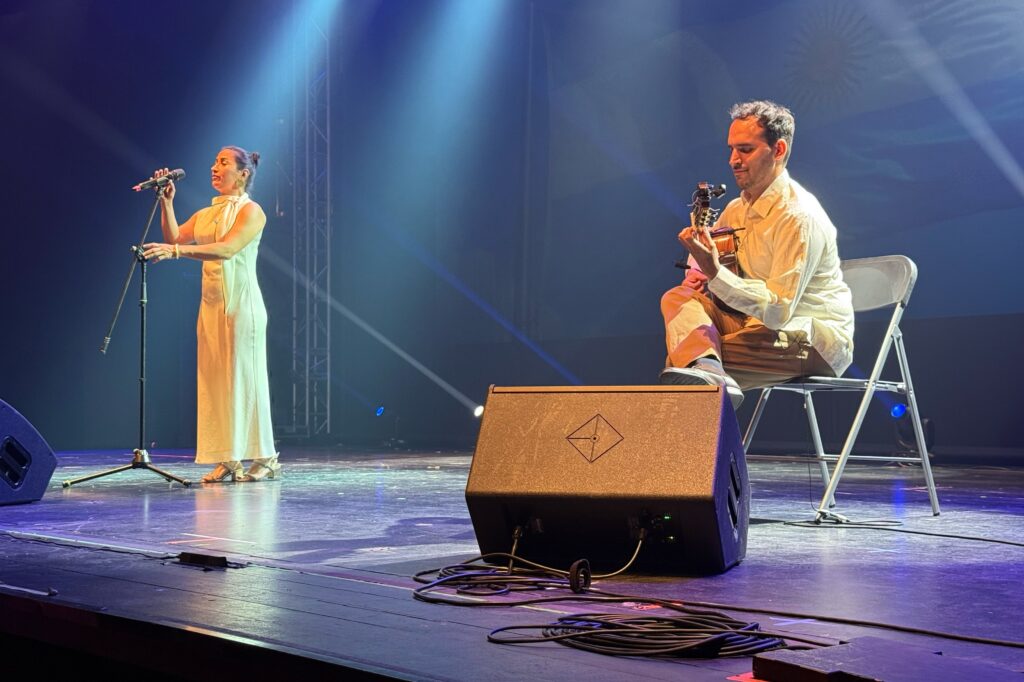
Finally, the ambassador shared that upon arriving in Madrid, he was asked what level of cultural activity the Embassy would have. He estimated it at 10%. “Today, Cecilia, my secretary, tells me that culture has risen to 50%, which gives an idea of what it can contribute to diplomacy.”
He also did not forget the more than half a million Argentines residing in Spain —there is no corner in Spain where there isn’t an Argentine—, of whom he confessed he was “surprised to see how they integrate and how they help in the Spanish community, it is a pride.”
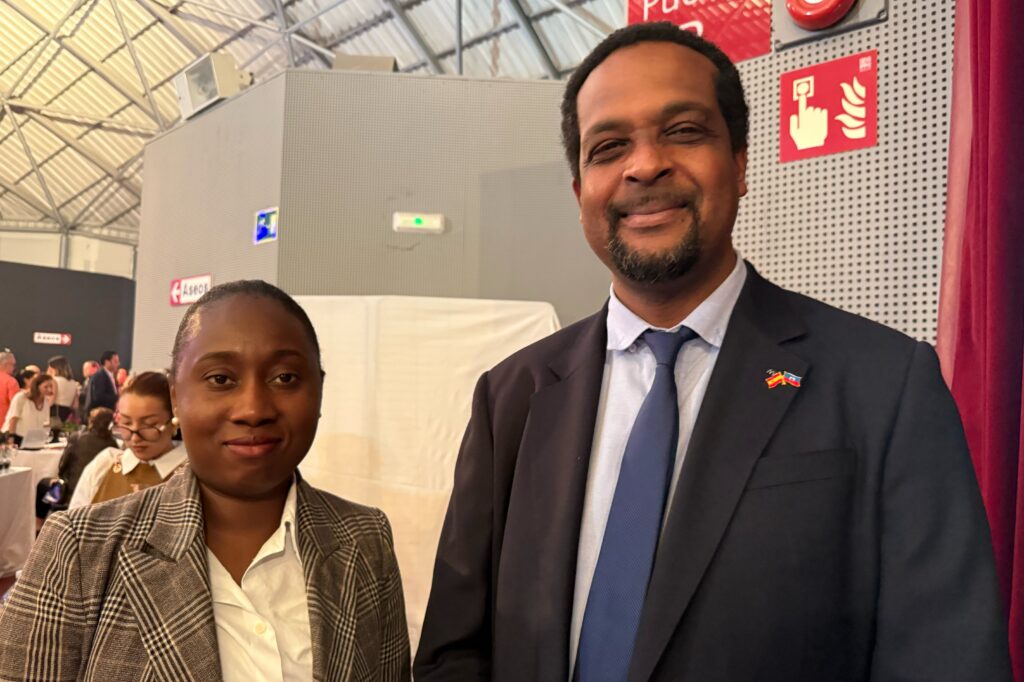
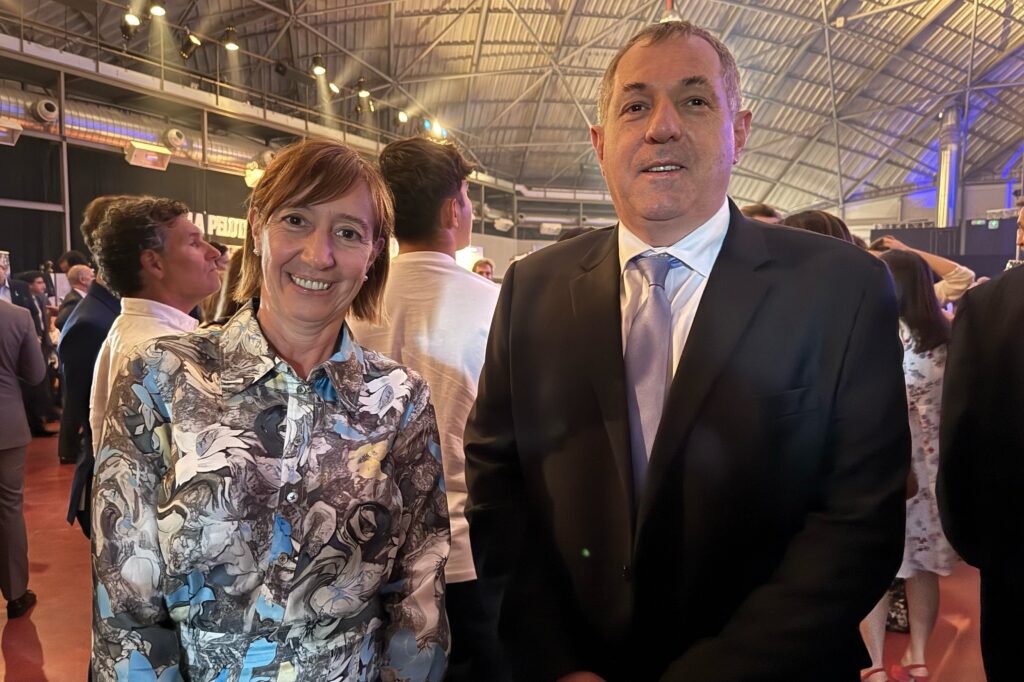
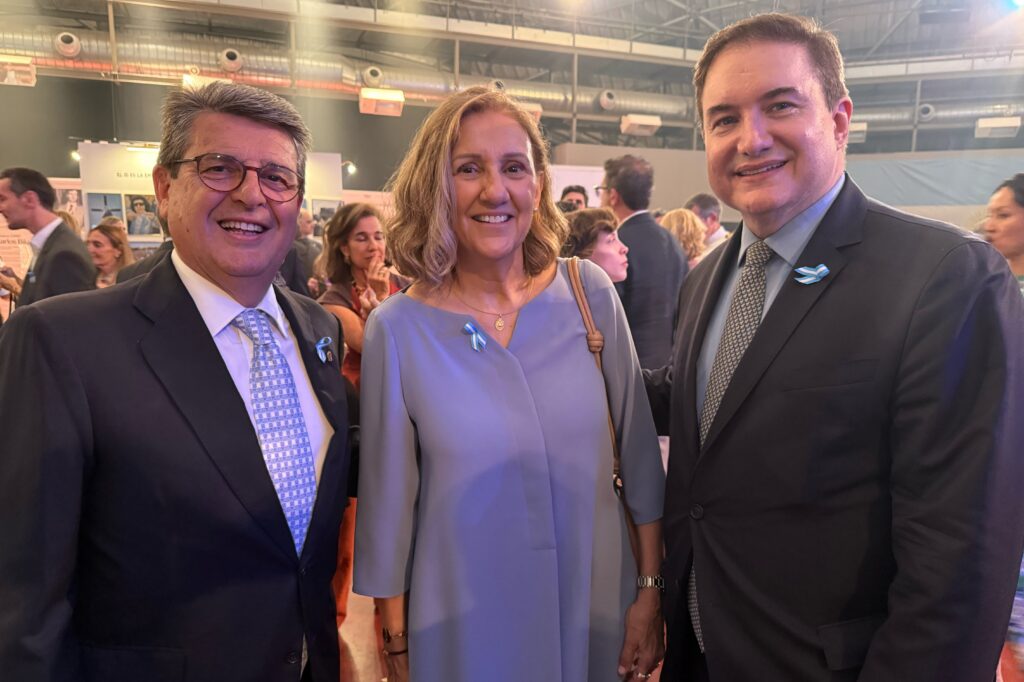
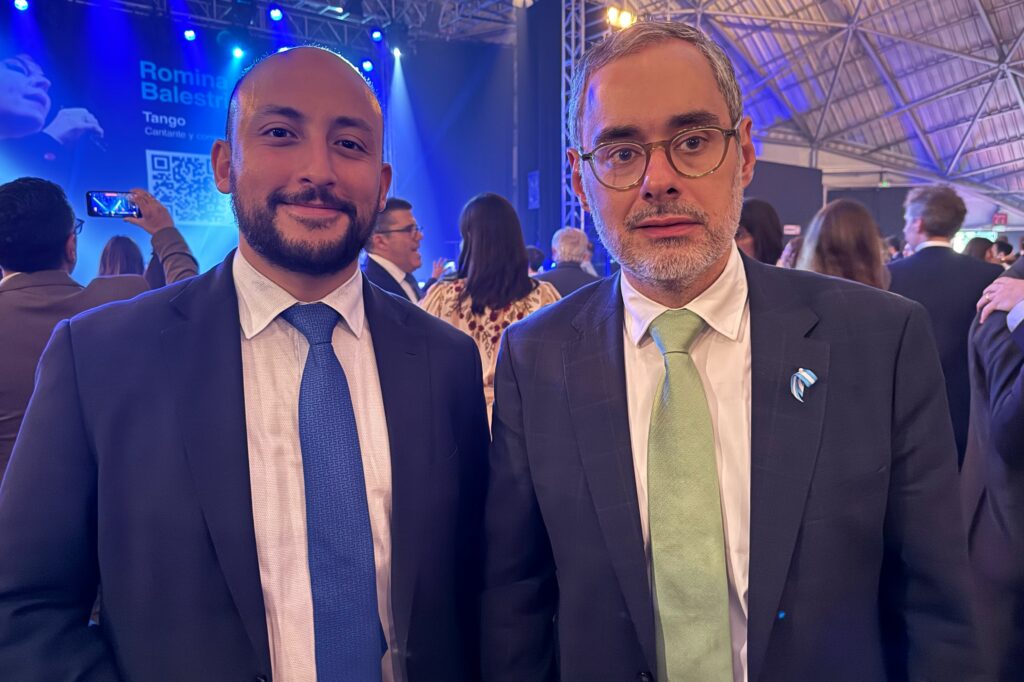
More than 600 people attended the reception, held at the Municipal Center, La Esfera de Alcobendas, including representatives from the Spanish Administration, ambassadors, businessmen, and members of the Argentine community in Spain.