


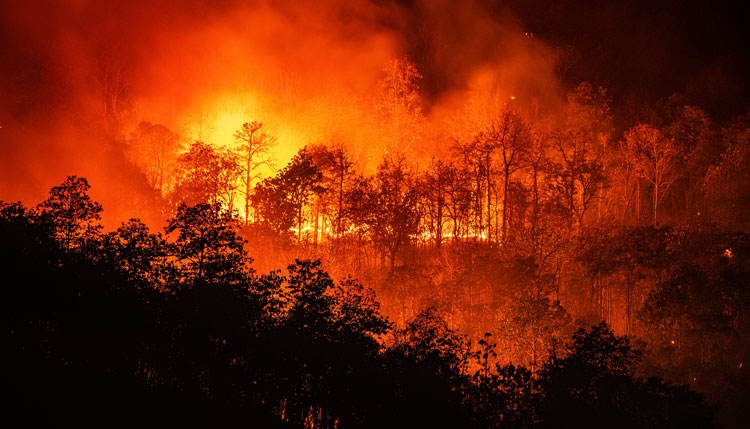
The European Commission helps to finance and coordinate the deployment of a record number of firefighters, planes, and emergency experts under the Civil Protection Mechanism, given the increased risk of wildfires across Europe.
777 firefighters from 14 European countries will be strategically pre-positioned in high-risk areas in Cyprus, Greece, Italy, France, Spain and Portugal. This is the highest level of participation since the pre-positioning program was launched in 2022. Meanwhile, 22 firefighting planes and 5 helicopters from the EU fleet are ready to support countries under pressure.
As wildfire seasons become longer, earlier, and more destructive, the Commission ensures that more firefighters, aircraft, and experts are ready to support national services when and where the risk is greatest.
This response is backed by coordination and support 24 hours a day. Throughout the wildfire season, experts from the EU’s 24/7 Emergency Response Coordination Centre will monitor risks and support deployments using meteorological and scientific analysis. The Centre will enhance its monitoring with additional wildfire experts from member states and participating countries, along with specialists from the Commission’s partnerships with scientific institutions.
The European Forest Fire Information System will provide ongoing forecasts on wildfire risk, while EU satellite services such as Copernicus will provide emergency maps and geospatial analysis to support decision-making on the ground.
Additionally, the EU will also launch a new European regional firefighting station in Cyprus this year to strengthen wildfire preparedness and response capabilities across Europe and the southern Mediterranean region. The Cypriot firefighting regional station will host the pre-positioning of six aircraft and will also organize training and exercises for civil protection professionals with the aim of supporting knowledge exchange and best practices.
The summer fleet of 2026 supported by the EU Civil Protection Mechanism will consist of 2 medium amphibious planes from Croatia, 2 light planes (in addition to four light planes funded by other EU instruments) from Cyprus, 2 helicopters from the Czech Republic, 4 medium amphibious planes and one helicopter from France, 4 medium amphibious planes from Greece, 2 medium amphibious planes from Italy, 2 light planes from North Macedonia and another 2 from Portugal, one helicopter from Romania and another from Slovakia, 2 medium amphibious planes from Spain and two light planes from Sweden.
Through the EU Civil Protection Mechanism, countries affected by wildfires can request operational assistance when national capacities are overwhelmed. The Emergency Response Coordination Centre ensures uninterrupted operations by coordinating offers of assistance and supporting the deployment of personnel, equipment, and specialized capabilities provided by participating countries.
A key element of the European disaster response framework is the European Civil Protection Group, which brings together pre-committed response resources made available by participating countries for rapid deployment. These include firefighting planes, ground personnel, emergency medical equipment, shelter capabilities, and specialized experts trained to operate in challenging environments. To complement these resources, the EU has created rescEU, a strategic reserve of emergency capabilities designed to provide additional support during large-scale crises. It includes firefighting planes and helicopters, medical evacuation capabilities, field hospitals, and strategic reserves of essential supplies. rescEU assets are funded by the EU and can be deployed when national and pooled capacities are insufficient.