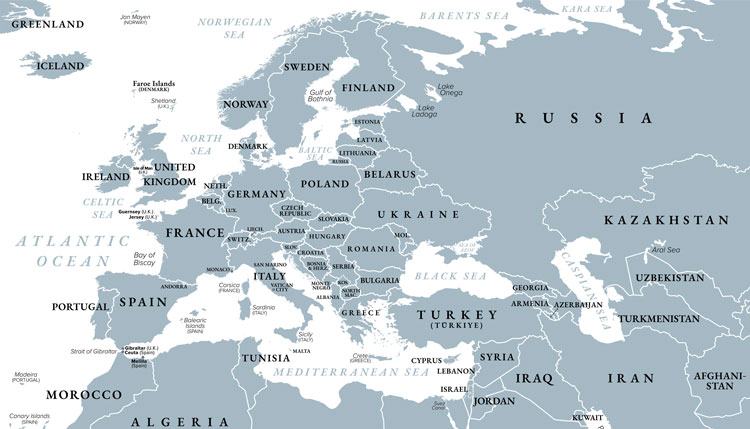
In the framework of the Polish Presidency in the Council of the Baltic Sea States, the Embassy of Poland, in cooperation with the Embassies of Iceland and Estonia in Madrid, presents the conference Two Seas, One Security Crisis: Europe’s Baltic and Mediterranean Challenges.
The event will take place tomorrow Tuesday from 10:30 AM to 2 PM at the La Caixa Foundation (Paseo del Prado, 36) and will be conducted in English.
Iceland will assume the Presidency of the Council of the Baltic Sea States (CBSS) succeeding Poland on July 1, 2026, at a time of profound geopolitical challenges in the Baltic Sea region.
For more than three decades, the CBSS has provided a unique framework to foster mutual understanding, build trust, and strengthen political dialogue, cultural exchange, and connections between people across the Baltic Sea region.
Following Russia’s large-scale invasion of Ukraine and the subsequent suspension of Russian actions and participation in the CBSS, it has increasingly adopted an enhanced approach to issues related to the evolving security context of the region, in which the forum provides a unique framework and platform for dialogue, information exchange, and communication on security policies.
European security currently faces its most serious challenges since the end of the Cold War. Russia’s ongoing war against Ukraine, conducted in direct proximity to NATO and EU borders, has fundamentally altered the European security environment. At the same time, changes have occurred in the global security landscape, particularly the redefinition of the United States.
Security priorities and the growing strategic role of China require European partners to reassess existing security frameworks and develop new, more resilient responses to emerging threats.
Among the most pressing challenges are Russia’s hybrid warfare tactics, which include disinformation campaigns, cyber operations, and economic coercion aimed at undermining political stability, social cohesion, and institutional resilience of European states. These activities target democratic processes, public trust, and critical infrastructure, thereby posing long-term risks to European security and unity.
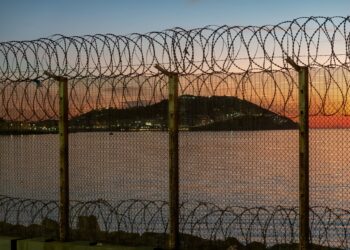
In this context, the security of the Baltic Sea and the Mediterranean has increasingly become an interconnected and strategically significant space. The Baltic Sea region, which has emerged as one of the key areas of confrontation with Russia and is often described as a “frontline sea,” faces acute challenges related to the protection of critical elements, maritime infrastructure, the containment of Russia’s so-called “shadow fleet,” and the limitation of Russian export capabilities that help finance its war effort. Similarly, events in the Mediterranean highlight that the importance of maritime security, cooperation, protection of energy infrastructures, and communication routes are vital to European economic and security interests.
In this context, greater cooperation between Baltic and Mediterranean countries is essential, especially in the areas of maritime security, information exchange, resilience against hybrid threats, and strengthening European defense capabilities. Regional cooperation frameworks, including organizations like the Council of the Baltic Sea States, can play an important role in complementing NATO and EU efforts, fostering practical cooperation, trust-building, and regional expertise.
The seminar aims to provide a platform for in-depth debate on current and emerging threats to European security from the perspectives of the Baltic and Mediterranean. It seeks to identify common challenges, share best practices, and explore concrete ways to strengthen cooperation between the regions. Special attention will be paid to the role of NATO, the European Union, and regional cooperation mechanisms (such as the Council of the Baltic Sea States) in addressing hybrid threats, maritime security challenges, and the protection of critical infrastructures. A specific session will focus on the experience of Baltic countries and lessons learned in resisting Russian military aggression, hybrid warfare, and disinformation campaigns.
Experts will share their perspectives derived from the war, compare their assessments with those of their European counterparts, and identify areas for future cooperation, capacity development, and training.
Two panels will take place:
Panel I
Countering Hybrid Threats at Sea: Ensuring Maritime Routes and Energy Infrastructure
Maritime energy security, hybrid threats, energy transition, and the activities of the Russian shadow fleet: opportunities for greater Baltic-Mediterranean cooperation
This expert panel will focus on practical experiences and policy responses related to maritime security, protection of critical energy and communication infrastructure, and combating hybrid threats at sea. It will explore opportunities for closer cooperation between Baltic and Mediterranean countries, including joint initiatives, information exchange mechanisms, and coordinated responses to common challenges.
Participating will be Anna Maria Dyner, Head of the International Security Program, Polish Institute of International Affairs; Stefan Ingvarsson, Analyst and Project Director, European Expert Talks on Russia, Stockholm Center for Eastern European Studies SCEEUS of the Swedish Institute of International Affairs (UI), and Henrik Praks, Researcher, Security and Resilience Program, International Centre for Defence and Security, Estonia. The panel will be moderated by Yevhen Fedchenko, co-founder and editor-in-chief of the fact-checking website StopFake.org.
Panel II
The Future of European Security in the Context of Current Threats
War in Ukraine, hybrid warfare, disinformation, the Russian secret fleet, and the protection of critical infrastructures: Baltic and Mediterranean perspectives
Speaking will be Marcin Bosacki, Secretary of State at the Polish Ministry of Foreign Affairs, and Thórdis Kolbrún Reykfjörd Gylfadóttir, former Minister of Foreign Affairs of Iceland. The panel will be moderated by Charles Powell, director of the Real Instituto Elcano.
This high-level panel will analyze the evolution of the European security architecture in light of current and emerging threats. The respective roles of NATO, the European Union, and regional cooperation structures will be discussed to strengthen deterrence, resilience, and collective security across Europe.