


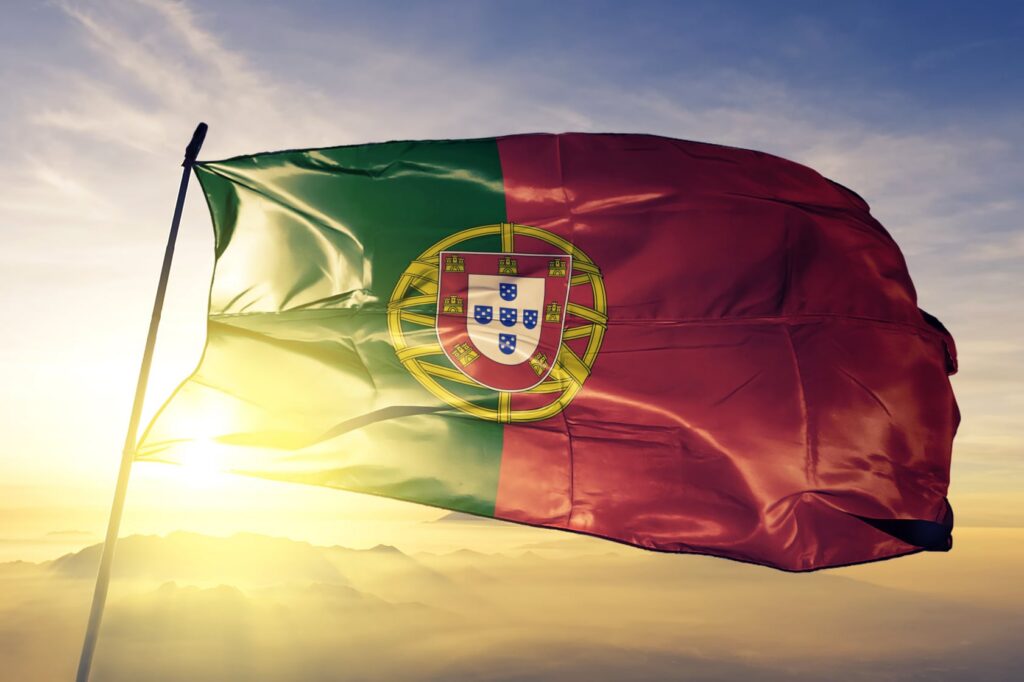
On June 10th, the national holiday of Portugal is celebrated. We celebrate our identity and our unalterable territorial cohesion with the same borders for nine centuries. We celebrate our achievements and victories as a people and as a nation, but we do so, as usual, with a very critical and demanding sense. We tend to be proud of our identity, but rarely vain.
And this is because the Portuguese tend to be demanding of the elites that lead them, but also very self-critical because, in the end, the duty to improve a nation does not solely rest on the legal and judicial responsibility of the rulers.
We have the notion that this is a moral responsibility and ethical duty of an entire society that has the ambition to want to be better, to be more cohesive, to be fairer, with self-esteem and that respects itself.
But we do this, of course, with nuances that have evolved over time, for many centuries.
Portugal is one of the oldest countries in the world. We have been debating for over nine hundred years, wanting to be better without losing our identity, which is naturally composed of qualities and defects.
I will not bore you with this debate that belongs to the Portuguese about themselves. But I will talk to you about a crucial element of Portugal’s identity since the 12th century.
Portugal only exists as a nation because it has always, always had a survival instinct. Because it has always perceived that its ambitions have always been greater than its resources and to achieve its ambitions of sovereignty and success, it knew it could never walk alone.
The existence of Portugal is therefore largely due to this common sense that makes us listen more than speak and to value friendship as one of the greatest virtues. Knowing that more important than judging is understanding and being tolerant of what distinguishes us and always keeping in mind what unites us as the most important.
Knowing that among friends we do not always have to share the same ideas and identities, but only some interests, values, and always the solidarity and loyalty we owe to friends.
That is why we always absolutely respect the internal challenges of our friends without ever interfering, being supportive in their misfortunes and sharing their joys.
We therefore naturally expect our friends to do the same with us. That they appreciate us not because we are the same, but because we are friends and because our friendship is more important than the diversity of our opinions.
The Portuguese have always been very clear that having the ability to make friends and form alliances would be part of their permanent strategic sense. It would be part of their own identity.
That is why celebrating friendship with other friendly nations on our national holiday is the most logical and natural thing, because we also celebrate friendship as an identity element of our country.
On this day, I want to talk about the friendship between Portuguese and Spaniards.
I will not talk about the long history of the Hispano-Portuguese relationship. I leave that to the academics.
Today I will focus only on some very symbolic aspects that occurred over the past year.
Since I arrived in Spain a little over a year ago, I have had the opportunity to witness a multitude of gestures that lead to the conclusion, without surprise, that the friendship between Spaniards and Portuguese is intense, authentic and genuine, reciprocal and is much, much more than social declarations of opportunistic circumstance.
It is a tangible friendship, with concrete results every day and with very inspiring examples of how, together and with friendship, Portuguese and Spaniards provide examples of how stories of overcoming and mutual aid can be built.
Since our last celebration of Portugal Day at the Palace of Liria, we had, among others, a trip by the King of Spain to Lisbon, two visits to Madrid, one from the outgoing president and another from the new president of Portugal. We had a Hispano-Portuguese Summit that brought together in Huelva the president of the Government of Spain and the Prime Minister of Portugal with several ministers from both governments.
All these meetings had a single objective: to continue strengthening the relationship between the two countries in all domains and for the benefit of the citizens of Portugal and Spain.
I could talk a lot about the importance of all these visits and meetings, but as they have been widely publicized by the media, I prefer perhaps to focus on two very special moments that, while being little known to the public, still strongly illustrate how sometimes some people, with total discretion and without seeking publicity, decide to give proof of generosity, nobility of character and friendship for us.
That is why I see it as my duty, as my moral obligation, to honor today two Spaniards for the unequivocal proofs of great friendship they have shown for my country and my people in recent months.
Therefore, on behalf of my country, I would like to mention Minister Sara Aagesen and commend her stance at that very difficult moment for Portugal and the Portuguese. Likewise, I would like to recognize the Duke of Alba, Carlos Fitz-James Stuart, for his generosity in opening the Palace of Liria for the exhibition of Joana Vasconcelos and for the celebration of Portugal Day, a gesture of support for Portuguese culture.
These are just two examples of people who, with discretion and generosity, demonstrate a friendship that materializes in many other situations: from Badajoz to Vigo, passing through Madrid or Seville, there are citizens, local authorities, professionals and collaborators who, day after day, build, with their gestures of cooperation, solidarity and closeness, the Luso-Spanish relationship at all levels. To all of them, I raise my tribute and gratitude today.