



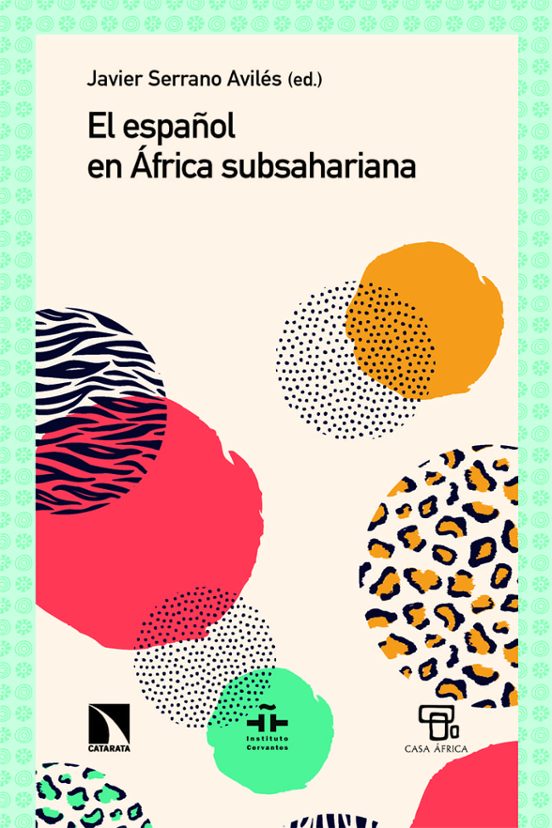
The Cervantes Institute is organizing tomorrow Tuesday at 7 PM at its Madrid headquarters the presentation of the book The Spanish in Sub-Saharan Africa, a joint work between the Cervantes Institute and Casa África.
This volume, which follows the trail of the previous publication from 2014, presents an updated and detailed view of the situation of Spanish and its teaching and learning on the African continent, a strategic enclave for the international projection of the language.
The future of Spanish is built where there is imagination, work, and community. And one of the places where this construction is particularly clear today is Africa. A continent that is often thought of from the outside and reduced to simplistic categories inherited from other times. However, it is enough to look at its linguistic diversity to understand that approaching the continent requires a careful gaze freed from prejudices. In this plural framework, Spanish does not appear as a foreign body, but as a language that, in various ways, has been finding spaces for rooting, learning, and creation.
More than three and a half million Africans learn Spanish each year in Sub-Saharan Africa. This figure places the region as the fourth in the world in terms of the volume of students of Spanish as a foreign language, with 13.5% of global demand. Behind these numbers are stories of interest, effort, and curiosity, but also a shared bet: that of those who see in Spanish a tool capable of opening opportunities and transforming their professional future.
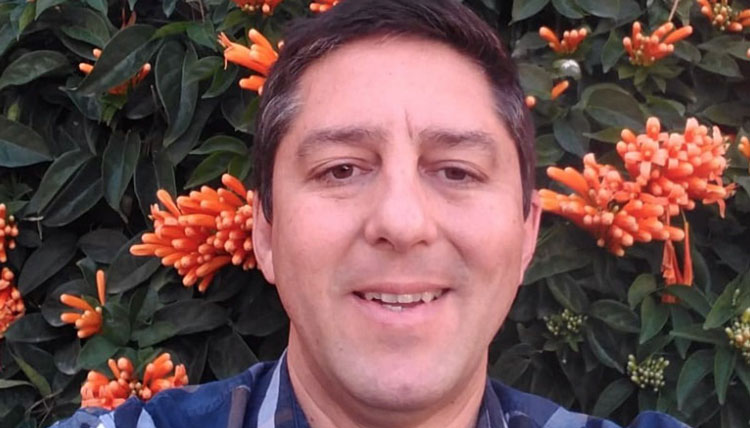
This book is the result of a collaboration between Casa África, the Cervantes Institute, AECID and the network of Spanish embassies on the continent. Under the coordination of the editor and compiler Javier Serrano Avilés (in the photo), fifty authors – African researchers, Hispanists, and specialists from different regions of the world – make up a choral, diverse, and polyphonic work. Its pages invite us to imagine the future of Spanish on the continent, but also to recognize that Africa already speaks it in the present, with a vitality that manifests itself in classrooms, universities, and cultural spaces where the language becomes a living practice.
All these conclusions will be presented at the event, which will be inaugurated by Carmen Noguero Galilea, Secretary General of the Cervantes Institute, and José Segura Clavell, Director of Casa África. Subsequently, Francisco Moreno Fernández, Director of the Global Spanish Observatory, will offer some insights on the presence of the language in the countries of Sub-Saharan Africa, a topic that will be developed in the subsequent colloquium by Javier Serrano Avilés, editor of the publication; Hans Denis Bekale, secondary school teacher in Gabon and co-author; Oscar Kem-Mekah Kadzue, professor at the ENS of Yaoundé and co-author, and Concha Barceló Estevan, Director of the Cervantes Institute in Dakar. The colloquium will be moderated by Álvaro García Santa-Cecilia, Academic Director of the Cervantes Institute.
The event will be free to access until full capacity is reached and will also be broadcast live on the YouTube channel of the Cervantes Institute. To reserve a place, please confirm attendance by registering on the event page on Eventbrite or by sending an email to invitaciones@cervantes.es.
Number of pages: 688
Publisher: Los Libros de la Catarata
Binding: Softcover
ISBN: 9788410676183
Price: 30.40 euros