There are countries —and also rulers— that spend half their lives trying to justify themselves or assert their worth with methods that are not always ethically acceptable. And there are others that, without raising their voices, manage to make the world want to listen to them. They do not always achieve this with a summit, nor with an institutional campaign, nor with a speech. They cultivate a more subtle and demanding art: that of evoking desire without stridency, that of being present without the need to impose themselves.
Many times they achieve this through something much simpler and, at the same time, much more powerful: a museum that forces one to look differently; a festival that transforms a city into a reference point; a work of art that pushes one to think; a musical piece that transports the listener to other worlds; a space where science becomes a shared experience; a table where one understands, almost without realizing it, that culture is also eaten, drunk, listened to, smelled, and shared. In that sum of sensitive forms of presence lies, precisely, the essence of what we call cultural diplomacy.
Sometimes we forget an elementary truth: countries do not only compete for political influence, investments, or security. They also compete to be admired, to be understood, to be remembered. And it is there that the concept comes into play that is often talked about and so rarely truly understood: soft power. That is, the ability to attract rather than impose, to evoke interest instead of suspicion, to open doors instead of closing them.
In these years of blocs, wars, polarization, geopolitical anxiety, and constant noise, that soft power has become much more important than many imagine. Because, when everyone is shouting, real influence usually belongs to those who can generate respect without stridency. And culture, in its broadest sense, remains the finest and, possibly, most effective tool to achieve this.
It is worth saying it bluntly: culture is not a pleasant adornment of foreign policy nor a secondary chapter within the great public discussions. It is not the cocktail before the important matters nor the elegant after-dinner conversation that follows. Culture must be, in itself, one of the important matters.
It is because it constitutes a form of international presence, a way to project values, a means to generate trust, and a way to show who you are without the need to turn everything into a slogan. It operates where almost nothing else does with equal effectiveness: in the territory of prestige, memory, symbol, and shared emotion. There, it is decided whether a country inspires distance or closeness, suspicion or interest, coldness or respect.
It is not just about being there, nor about making oneself heard louder than others. It is about convincing. About generating trust. About building a reputation that does not solely depend on economic, military, or political muscle. In that almost intangible space —made of perceptions, gestures, and symbols— a decisive part of power in the 21st century is at stake. A power that does not threaten, but seduces; that does not invade, but persuades; that does not demand attention, but calls it forth with the naturalness of the inevitable. And it is there that culture stops being a luxury to become a strategy.
That is why I am increasingly interested in that diplomacy that is not practiced only in embassies, ministries, or multilateral forums, but also in museums, auditoriums, festivals, theaters, galleries, kitchens, and restaurants. There, a decisive part of a country’s reputation is at stake. There, something that cannot be bought is produced: emotional credibility. And whoever achieves that has a huge advantage over those who only know how to display strength or money. Culture creates bonds. And the bond is worth more than the impact. The impact lasts little; the bond, on the other hand, remains.
If one wants to understand how that mechanism works, it is enough to look at the United Arab Emirates. I live here and see it every day: few nations have understood so well that international reputation is not built only with skyscrapers, airports, finance, or big headlines, but with cultural institutions capable of turning a political idea into a tangible, open, and shared experience.
Let’s start with Abu Dhabi, already transformed into the cultural capital of the Arab world. The presidential palace Qasr Al Watan and the majestic mosque Sheikh Zayed return to the center of the narrative, the legacy of Arab and Islamic knowledge —influenced so much by the Umayyad dynasty from Córdoba— not as an inert relic, but as a living contribution to the history of the world.
And there is, moreover, a particularly eloquent place: the Abrahamic Family House. A brilliant idea, conceived as an expression of the principle of tolerance so deeply integrated into the culture of the United Arab Emirates. Inspired by the Document on Human Fraternity signed in Abu Dhabi on February 4, 2019, by Pope Francis and the Grand Imam of Al-Azhar, Ahmed el-Tayeb, and to whose initiative the rabbi M. Bruce Lustig later joined, representing the Jewish community, this proposal crystallized into a state project aimed at promoting peaceful coexistence among religions.
Designed by Sir David Adjaye on Saadiyat Island, the complex houses three houses of worship —mosque, church, and synagogue— of identical spatial dignity, although endowed with their respective distinctive features. It is not just a remarkable architectural ensemble. It is an image built to remain in the moral retina of the visitor: a way of saying that coexistence among creeds and tolerance among those who think differently need not be a well-intentioned abstraction, but can take visible, concrete, and habitable form.
The Louvre Abu Dhabi, a majestic work by Jean Nouvel, is not just a museum: it is a declaration to the world. It does not limit itself to exhibiting works; it stages an idea of civilization based on dialogue between cultures, on the shared history of humanity, and on the possibility of contemplating heritage without enclosing it in mental borders. In that same landscape lies the Guggenheim designed by Frank Gehry. Its presence does not respond to a simple branding effect, but to a deeper logic: to position the country as a platform for global artistic exchange, with educational vocation, trans-regional vision, and intellectual ambition.
And, if I may, it is profoundly symptomatic the little value that has often been granted in our country to that international dimension of culture. I am fully aware that every cultural projection strategy coexists with tensions, limits, and debates. But precisely for that reason, it still seems painful to me that our most emblematic museum, El Prado, despite having been part of the conversations about this ecosystem, did not find its place here. I honestly believe that this absence is the expression of a deeper problem: institutional inertia, changing budget priorities, and, above all, an insufficient understanding of the strategic value that culture has, as we have had the opportunity to verify on other occasions, for the country brand. The result has been a myopia as frequent as it is limiting when it comes to asserting ourselves outside our borders and, perhaps also, the persistence of prejudices that are hard to justify and even harder to understand.
To that constellation of first-level cultural places are added others scattered across different emirates: And there is one that, from the perspective of cultural diplomacy, deserves to be highlighted, the Fujairah Philosophy House, which when it was established, generated a broad debate in the Islamic world due to the promotion of critical and rational thinking in societies with strong religious roots, dedicated to reflection and debate at a time when some seem determined to rob our children of the pleasure of learning to think; This entity organizes annual international conferences and fosters analysis on urgent issues in the Arab world. In addition, it has achieved relevant milestones: Creation of the Fujairah Philosophy Dictionary, the first work in Arabic that compiles the thoughts of regional and international philosophers or its participation in the Declaration on Philosophy and Interculturality presented to the G7.
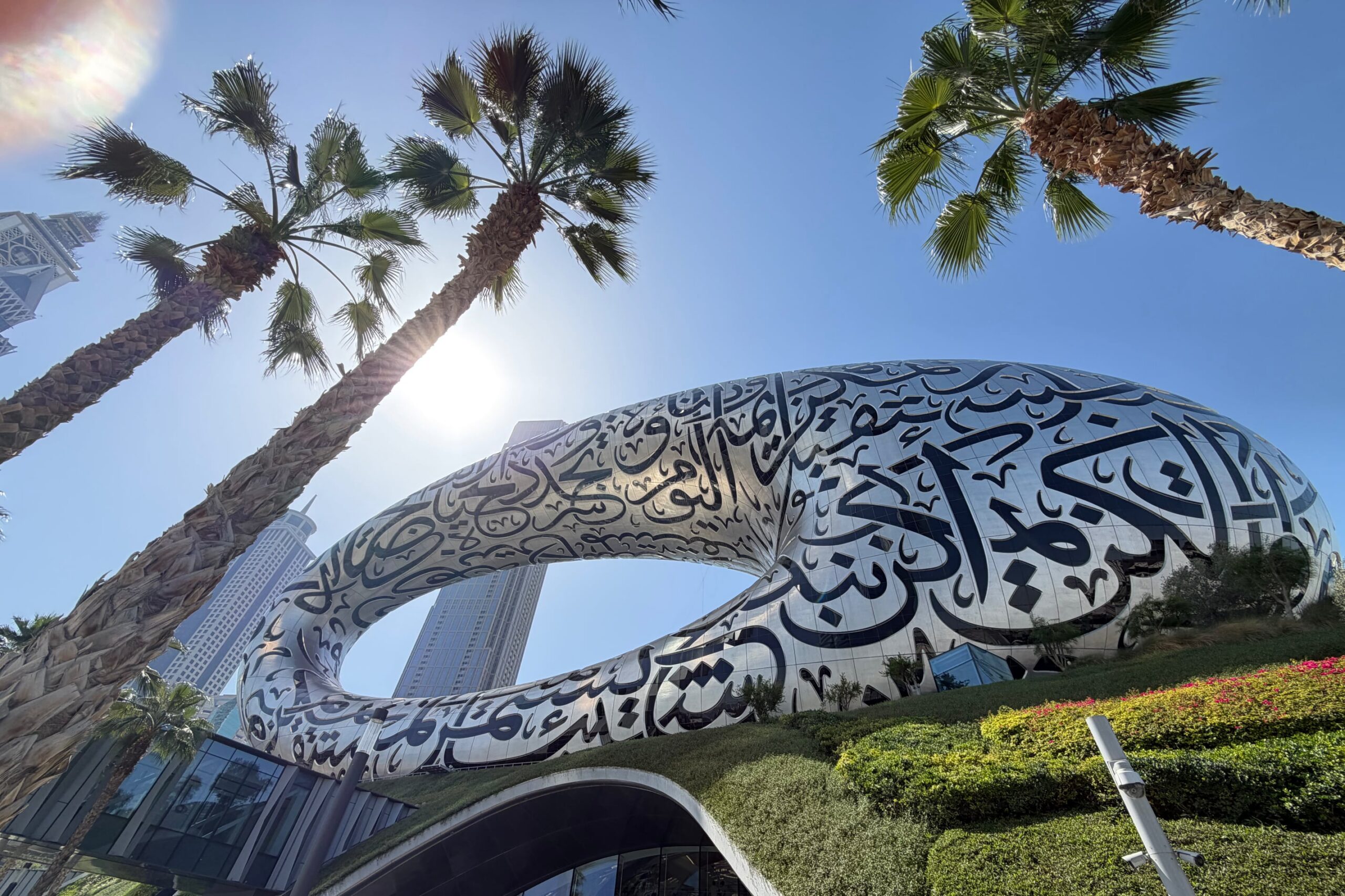
Another notable place is the Dubai Museum of the Future, an architecturally spectacular building that has managed to turn innovation and science into cultural narrative, transforming tomorrow into an exhibition space and technological optimism into a form of national identity; or the House of Wisdom, in Sharjah, conceived as a contemporary mirror of the great library of Baghdad from the 9th century.
Viewed as a whole, all this is not decoration or superficial marketing. It is a carefully articulated prestige policy. The UAE has understood that soft power is not about appearing powerful, but about being perceived as valuable.
And that nuance changes everything.
A country can impose itself by its strength and awaken fear, if not contempt, and that does not make it more admirable or more important. A small country like this, on the other hand, aspires to occupy a prominent place in the world, to become a place that others want to approach, understand, study, and even imitate, and the recurrent invitations to G7 meetings demonstrate this. And that recognition —much more demanding and lasting— is not obtained by decree or by displaying power. It is cultivated over time, with coherent policies, with a vision for the future, with trustworthy institutions, and with leaders who exemplary care for those who live here, whether locals or foreigners.
It requires, above all, a quality that is currently scarce in the international political situation: to respect the intelligence of the other and to make each person —those who live here and those who come from outside— feel genuinely welcomed and valued, not for what they possess, but for what they contribute as human beings. It may be difficult to understand without direct experience, and even more so when we carry prejudices or speak from ignorance, but it is part of the daily reality of many of us who live and work here. That does not mean, of course, that this is a place free of problems or lacking in aspects to improve. No country is. But it does mean that, in this area, the UAE has understood with remarkable clarity how to use its cultural tools to strengthen its international position and improve its valuation as a destination.
Let us now pause on some of the pieces that make up this puzzle we call cultural diplomacy.
A museum is not a building: it is a declaration
In that scenario of soft power and knowledge diplomacy, museums remain an irreplaceable tool. Not because they are solemn showcases, but because they are machines for ordering time and, probably, one of the most solid, lasting, and elegant manifestations of cultural diplomacy.
They tell the visitor that there is something worth preserving: a way of telling history, a conversation that a society wants to maintain with itself and with the world, a certain way of speaking about the past without renouncing the future. A great museum is not a warehouse of admirable pieces; it is an architecture of meaning. And it also has a formidable advantage over almost any other contemporary device of persuasion: it inspires trust.
When well conceived, museums do not limit themselves to preserving valuable objects. They preserve memory, yes, but they also produce narrative. They organize the past so that a society can speak of itself intelligently. They show what a country wants to preserve, but also what it wants to tell the world about its identity, its sensitivity, its level of ambition, and its way of understanding history.
That matters because a museum conveys something that no institutional tool can achieve on its own: authority. A museum is not part of a propaganda campaign and, precisely for that reason, persuades better. No one enters it expecting slogans; they enter expecting knowledge, beauty, truth, context, surprise. And that disposition of the visitor makes it an extraordinarily effective space of influence.
Moreover, the museum has a quality that few cultural tools can match: it remains. It does not last a night, nor a week, nor a season. It is there every day. It dialogues with different audiences. It welcomes the foreign visitor, the student, the researcher, the family, the curious, the citizen who returns because they feel they have not yet finished seeing or assimilating what is in front of them. A museum establishes a continuous relationship with its community and with those who come from outside. It does not need to call attention: it deserves it simply by existing.
That is why it seems simplistic to think that museums serve only to guard the past. A good museum does exactly the opposite: it puts the past to work on the present and projects it towards the future. It turns memory into conversation. Sometimes, even, into reconciliation. Because looking at the heritage of another people with respect is not a neutral activity; it is an act of recognition. And recognition, both in international politics and in human coexistence, has always been a valuable currency.
It is also worth remembering something that is often lost in cultural debates: a great museum not only generates symbolic prestige. It generates city. It attracts visitors, activates neighborhoods, sustains employment, stimulates economic life around it, educates, organizes centralities, and elevates public conversation. A well-made museum improves the urban and civic ecosystem in which it is embedded. It is not a luxury. It is cultural infrastructure with very real effects.
Art reaches where discourse fails
Alongside the museum, and as a natural extension of its essence, art in the broad sense remains one of the most delicate and profound expressions of soft power. Not because it works miracles, but because it opens paths of understanding where political language often hardens or fails.
There are issues that, posed from a partisan logic, provoke immediate rejection. However, those same issues, when they become image, scenic gesture, cinematic narrative, or installation, manage to touch areas of human experience that rhetoric cannot reach. There lies their strength.
The examples are multiple: the emotional impact of Guernica; the expressions of freedom by Ai Weiwei; the visual intensity of Sebastião Salgado or Steve McCurry; some of Bong Joon-ho’s films; the documentary theater of Moisés Kaufman. All these works show that art can open spaces of understanding where direct confrontation would have provoked an automatic closure.
Art does not suppress conflict. It does not resolve social fractures or disputes between countries by decree. But it does something essential: it introduces nuances, breaks stereotypes, humanizes. Where public debate has become binary, art reminds us that the human condition never fits entirely into two slogans. That is why culturally vibrant societies are often more interesting to the outside world. They project density, intelligence, and inner freedom.
And in a time when so much public communication is designed to simplify to the absurd and ridicule the different, for a nation or community to be perceived as a place capable of producing relevant, uncomfortable, beautiful, or innovative art is not a secondary detail. It is a sign of maturity. It is a way of saying: here is a society that thinks, that creates, that questions, that does not fear to look at itself. And that, in the eyes of the world, is worth more than many other forms of exhibition.
Science as the axis of cultural diplomacy
As science becomes popularized and integrated into public experience, scientific diplomacy ceases to occupy a peripheral position and begins to play a central —increasingly decisive— role within the broad umbrella of cultural diplomacy. Not because it replaces other manifestations, but because it adds a complementary and unavoidable dimension: that of credibility, competence, and collective ambition as forms of influence.
In simple terms, scientific diplomacy consists of using science, research cooperation, and shared knowledge as a way to bring societies closer, generate trust, and tackle problems that no country can solve alone. We saw this clearly during the pandemic and we see it every day in international programs that manage to bring together peoples that, in other areas, would seem irreconcilable.
This applies to health, water, energy, climate, space exploration, artificial intelligence, or food security. Science, when it works well, not only produces results: it builds bridges.
In reflections on cultural influence, attention is often focused on art museums: repositories of prestige, emblems of refinement, custodians of beauty and memory. But, if art has been and continues to be a privileged vehicle of sensitivity and historical narrative, science has consolidated —especially since the second half of the 20th century— as the language in which an essential part of contemporary power is articulated: the ability to generate knowledge, maintain rigor, drive innovation, and anticipate the future.
As Natalia Martorell rightly points out, in an excellent article published in this medium, when information is not shared regularly, each country operates with a partial view of reality that makes it difficult to foresee risks, adjust models, or coordinate decisions. The scientific logic is expressed in global observation systems that gather distributed data and allow for the description and analysis of phenomena such as atmospheric circulation, ocean evolution, or the global spread of diseases. From this need, international data exchange networks have emerged that operate as an invisible infrastructure. Access to data directly conditions the capacity of states to act. It is in that space where scientific diplomacy operates splendidly, supporting the agreements and practices that make that exchange between countries possible.
In this context, science museums fit naturally, whose popularity is unquestionable and that often receive even more visitors than other types of cultural institutions, cease to be merely informative spaces to become strategic scenarios where a society can present itself as competent, reliable, and future-oriented. They function as transitional spaces within cultural diplomacy: places where culture ceases to be limited to the contemplation of legacy and is redefined as capacity in action, as a tangible demonstration of what a community knows how to do and where it can project itself.
The science museum turns cooperation and the future into public experience. It takes science out of the laboratory, the office, and the technical article and translates it into an accessible, tangible, and participatory language. It turns it into civic conversation.
A science museum is not simply a place with interactive experiments for children —though I wish there were many more—. It is an institution that shows how a society thinks about the world, how it relates to evidence, how it values curiosity, how it educates its new generations, and how it imagines tomorrow. And, in a century defined by the competition for knowledge and the capacity for anticipation, that exhibition is not neutral: it is a positioning. An assertion of model, ambition, and place in the world.
Science museums also have a particularly powerful quality: they democratize intelligence. They make visible that science does not belong to a closed elite, but to public conversation. They invite questioning, touching, experimenting, discussing. They break the false idea that scientific knowledge is cold or distant. They bring it closer to everyday life. They link it to the real dilemmas of a society. And there appears their most fertile diplomatic dimension: they generate trust.
That is fundamental. Because a society that inspires trust in its way of teaching, disseminating, sharing, and applying science projects a form of authority very different from that which arises solely from economic, political, or technological power. It projects civic authority. It shows that its commitment to knowledge is not just about producing innovation, but also about socializing it, explaining it, and putting it in dialogue with citizens.
That is why I find it so important to defend the role of science museums as one of the axes of cultural diplomacy. Because they expand the field. Because they take us out of the idea that internationally valuable culture is only that which is hung on a wall or performed on a stage. Science is also culture. It also expresses values. It also creates imaginaries. It also shapes the way a society is perceived from the outside.
And perhaps even more importantly: the science museum allows for something very rare and very valuable, which is to unite emotion and evidence, wonder and method, marvel and public reflection. It can talk about the cosmos, the human body, water, energy, or climate without losing the capacity for fascination. It can move while teaching. And that is a tremendously powerful form of influence.
The festival: when a city becomes a message
If museums represent continuity, discovery, and, in a sense, tranquility, festivals represent intensity. They are a form of cultural diplomacy in concentrated form. For a few days, an entire city can transform into experience. Its pulse changes, its atmosphere changes, the way it is perceived from the outside changes. Artists, journalists, visitors, cultural agents, creative professionals, and curious people arrive. Accents, schedules, aesthetics, and generations mix. In a very short time, a density of exchange is produced that is difficult to achieve through other means.
There lies precisely their strength. The festival is not just programming. It is climate. It is narrative in motion. It is accelerated reputation. A city with good festivals becomes internationally legible as a lively, open place, capable of attracting talent and welcoming diversity without fear. There is no need to proclaim it in an institutional slogan: it is enough that it happens.
The economy of festivals is often talked about: their tourist, hotel, gastronomic, and media impact. All that counts and is real. But to stop there would be to lose sight of the essential. The true value of a festival does not consist solely of what it invoices, but in what it makes one imagine. A great festival tells the world: things happen here, here people listen, here there is mixing, here there is an energy worth experiencing. And that feeling, that desire to be part of it, is at the very heart of soft power.
Music can also do politics
Music —whether whispered by a violin or expanded in electric pulses that cross thousands of people— contains a form of power that does not conquer, but seduces; does not impose, but reveals. In it travel collective stories, nostalgia, and longings. Where words become harsh, music flows naturally, dissolving all barriers. It is, in a way, diplomacy without protocol: a form of presence capable of making the foreign stop seeming strange and the distant become close.
And, if one thinks about it calmly, perhaps it is worth admitting that music possesses a capacity that borders on the miraculous. It crosses borders without asking permission from language. It can move someone who does not understand a single word of the lyrics. It can gather thousands of people who do not share a country, ideology, or biography for hours and make them leave with a shared experience. In that suspended moment, where so many differences dissolve effortlessly, music reminds us of something essential: even in a fragmented world, we are still capable of beating in unison.
Leveraging that unique quality is one of the great strengths of cultural diplomacy, and that is why there are countries that resort to music as one of their projection and meeting tools.
The table is also foreign policy
And then there is gastronomy, which for too long was treated as a picturesque appendage of culture when, in reality, it is one of its deepest and most effective expressions. The kitchen not only feeds: it tells. It tells who we were, with whom we traded, what we inherited, what we mixed, what we celebrated, what we offer to the other when we want to welcome them well.
I would even say something more: few things explain a civilization better than its way of sitting at the table. In food there is memory, geography, technique, class, rite, exchange, imagination, and desire. There is also hospitality. And hospitality is a very serious form of political intelligence.
A country that knows how to receive, that understands the symbolic value of the table, and that turns the gastronomic experience into a genuine invitation to meet is doing diplomacy without needing to seem diplomatic.
Eating together disarms. It breaks down defenses with an effectiveness that neither the most sophisticated protocols nor the best-drafted documents can achieve. It introduces a physical, primary complicity that no official staging can manufacture. Around a table, conversation loosens, loses rigidity, becomes franker, more human, more true. That is why gastronomy is such a powerful cultural influence tool: because it does not impose identity, it shares it; it does not exhibit it, it offers it; it does not harden it, it makes it hospitable.
Moreover, it has another magnificent virtue: it demonstrates that the most self-assured cultures do not entrench themselves, but rather engage in dialogue. There is no important cuisine that is not mixed. All great culinary traditions are the result of loans, travels, ports, mixtures, adaptations, and discoveries. In times of identity obsessions, gastronomy reminds us of an uncomfortable and beautiful truth: the own is also made of the received.
What truly attracts
In the end, museums, art, science, festivals, music, and gastronomy are not watertight compartments. They are part of the same ecosystem of prestige, meaning, and attraction. Some provide continuity; others, intensity. Some provide memory; others, a vision of the future. Some seduce with beauty; others, with shared intelligence. But all, if well thought out, work on the same ground: that of trust, curiosity, and respect.
And that is perhaps the decisive word: respect. Because the great skill of cultural diplomacy does not consist of pleasing everyone nor of dressing up in modernity. It consists of making others observe you with a mix of interest, esteem, and attention. It consists of being able to say something valuable to the world in a way that the world wants to listen.
In times of tension, that capacity is worth gold. When politics becomes harsh, culture softens the ground without making it superficial. When international debate hardens, culture keeps the possibility of conversation open. When power becomes noisy, culture continues to work quietly, which is how the truly important things are usually done.
That is why I increasingly distrust those who insist on treating culture as an accessory luxury. Either they do not understand its true scope, or they prefer to perpetuate ignorance among those who are loyal to them, precisely because they do not question, do not inquire, do not reflect, and therefore do not protest.
Culture is an infrastructure of meaning, a reserve of prestige and a deeply influential tool. It is, moreover, a way of building a country both inwardly and outwardly at the same time.
An extraordinary museum, a vibrant artistic scene, a fascinating musical work, a network of festivals with personality, a gastronomy offered with intelligence, and a tangible commitment to science and education do much more than adorn a nation. They explain it, elevate it, and make it desirable.
And in a future time —which I do not know if I will see, though I would like to— perhaps those who only display strength will be rewarded less and those who know how to generate trust more. Because, ultimately, the real footprint of a country is not limited to the spaces where it negotiates: it expands where it moves, where it teaches, where it welcomes, and where it shares the best of itself.
This form of diplomacy —the one that enters through the senses and settles in memory, in sight, in listening, in conversation, and in taste— is the one that builds the deepest and most lasting bonds. The one that does not dissolve the next day. The one that remains.