
Diplomacy News
es Español en English
08 de Aug, 2026
No Result
View All Result
  • Current Affairs
    • Business
    • Diplomacy
    • Geopolitics
  • In Depth
    • Interviews
    • Reports
    • Research
  • Life
    • Culture
    • Gastronomy
    • Tourism
  • Opinion
  • Agenda
  • Who is Who
  • DiplomacynewsTV
NEWSLETTER
Diplomacy News
NEWSLETTER
Diplomacy News
No Result
View All Result

Europe’s fragmented military industry: the brake facing current geostrategic challenges

In the presentation of the report by the Fundación Alternativas 'A more autonomous Europe', experts agreed that the EU has fallen behind in technological development

Alberto Rubio by Alberto Rubio
1 de July de 2026
in Research
Foto: AndreyPopov / iStock

Foto: AndreyPopov / iStock

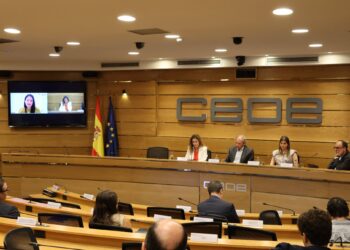
“Europe has lost conventional capabilities and has fallen behind in new defense technologies,” emphasized the director of the Coordination and Studies division of CESEDEN, Brigadier General Paulino Garcia, yesterday during the presentation of the report ‘A More Autonomous Europe’, prepared for the Fundación Alternativas by independent consultant Carlos Martí.

As the author explained during the discussion —in which the president of Alternativas, Diego López Garrido also participated— the report provides an integrated analysis of the elements that condition the continent’s autonomy: political, institutional, operational, economic, technological, and industrial, highlighting weaknesses, vulnerabilities, and needs, as well as the reasons or obstacles that may hinder its improvement.

The changes that have occurred in recent years in the global landscape —the invasion of Ukraine by the Russian Federation, Brexit, the rise of China, conflicts in the Middle East, or the new national security strategy of the US— pose a new and very complicated context for the action of the European Union.

According to Carlos Martí, “the new defense commitments require the United States to pay more attention to the Indo-Pacific and to ‘lighten the load’ in Europe, which forces us Europeans to take charge of our own defense.”

So, the main conclusion of the presentation is that the EU must invest more in defense in the face of a hypothetical Russian attack, which requires greater investments that will have to be financed by cutting other items or with greater borrowing.”

Therefore, all participants agreed that it is necessary for the European Union to be able to establish a European defense industry that coordinates resources to make better use of them. Diego López Garrido provided an example that illustrates this problem: “the industries of European countries produce 179 different types of weapons while the United States has 33 categories,” which gives an idea of the dispersion and waste of resources that comes with separate arms production.

The director of CESEDEN, Lieutenant General Miguel Ballestilla, summarized this widespread opinion when presenting the session, highlighting the “enormous difficulties we Europeans have in reaching an agreement and advancing a security and defense project to which we all contribute on equal terms.”

You can watch here the full session of the presentation in video.
Tags: Defence Industrydestacada1European UnionFeatured1Fundación Alternativas
Alberto Rubio

Alberto Rubio

Related Posts

Los participantes en la presentación del informe./ Foto: CEOE
In Depth

Sustainability in Ibero-America: more regulation new challenges

by Alberto Rubio
27 de July de 2026

Meeting the expectations of stakeholders is, for the first time, the main objective of CSR, according to the report of...

Read moreDetails
Informe ‘Chinese FDI in Spain: Global Outlook 2026’

Chinese investors strengthen their bet on the electric sector in Spain

20 de July de 2026
Fachada principal del Banco de España./ Foto: mot1963

The Bank of Spain expects a “solid growth” of the Spanish economy

12 de July de 2026
Informe LEO 2025: cómo impulsar y financiar el cambio productivo de América Latina

LEO Report 2025: how to promote and finance productive change in Latin America

6 de July de 2026
Diplomacia cultural, el poder amable

Cultural diplomacy, the gentle power

16 de June de 2026

Lo más leído de esta semana

  • Annual Report on Foreign Trade 2025

    The Spanish agri-food sector leads exports with 78.044 million

    155 shares
    Share 62 Tweet 39
  • Tourism employment in Spain exceeds 3.18 million and grows by 5.4% in 2026

    154 shares
    Share 62 Tweet 39
  • Ambassador of Cyprus delivers Cyclamen cyprium to the Real Jardín Botánico-CSIC

    154 shares
    Share 62 Tweet 39
  • The EU allocates 20 million euros for humanitarian aid to Venezuela

    154 shares
    Share 62 Tweet 39
  • Minister Luis Planas evaluates the last three years of the Common Agricultural Policy

    153 shares
    Share 61 Tweet 38

Newsletter Diplomacy News

NEWSLETTER

Lo último en Diplomacy News

The ambassador of Cyprus, Michalis Ioannou, accompanied by the director of RJB-CSIC, María-Paz Martín (on the left), and Beatriz Perlines, head of the Garden and Wooded Unit, section I, of the Garden. /Photo: Courtesy of RJB-CSIC

Ambassador of Cyprus delivers Cyclamen cyprium to the Real Jardín Botánico-CSIC

8 de August de 2026
Photo: Istockphoto

Tourism employment in Spain exceeds 3.18 million and grows by 5.4% in 2026

8 de August de 2026

Sections

  • Business
  • Culture
  • Current Affairs
  • Diplomacy
  • DiplomacynewsTV
  • Gastronomy
  • Geopolitics
  • In Depth
  • Interviews
  • Life
  • Opinion
  • Reports
  • Research
  • Tourism

About Diplomacy News

  • Nosotros
  • Aviso Legal
  • Política de Privacidad
  • Política de Cookies
  • Contactar
logo diplomacy news

© 2026 Diplomacy News.

No Result
View All Result
  • Current Affairs
    • Business
    • Diplomacy
    • Geopolitics
  • In Depth
    • Interviews
    • Reports
    • Research
  • Life
    • Culture
    • Gastronomy
    • Tourism
  • Opinion
  • Agenda
  • Who is Who
  • DiplomacynewsTV
  • Español

© 2026 Diplomacy News.