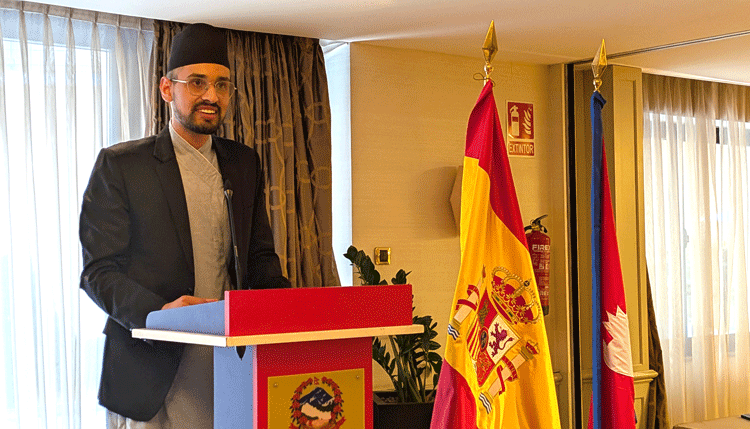
The Hotel InterContinental in Madrid was the scene yesterday afternoon of the event Nepal Night 2026, organized by the Embassy of the Asian country, consisting of an evening dedicated to discovering the diversity, culture, and beauty of Nepal.
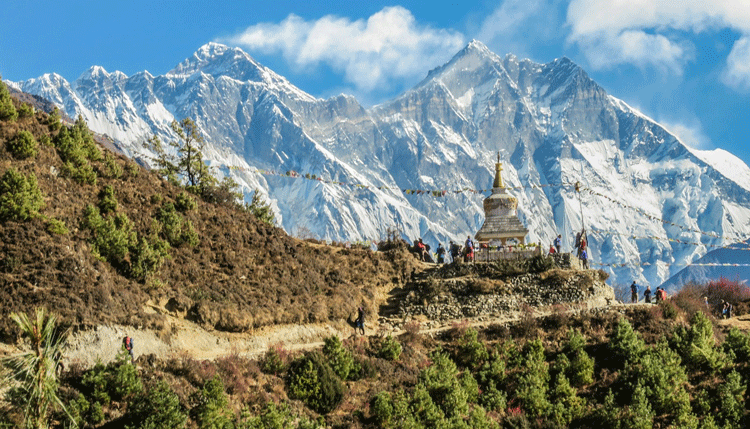
Purak Adh, chargé d’affaires, a.i., of the Nepalese Embassy presented the tourism promotion event. “Nepal is one of the most authentic destinations on the Asian continent,” he pointed out. “It is not just Everest, it is pristine nature, ancient culture, spiritual well-being, world-class adventure, and living heritage. A country that offers transformative experiences in a territory between China and India with numerous tourist attractions.”
In numbers, the country received 1.2 million international visitors in 2023. Nepal has 10 UNESCO cultural and natural heritage sites, 12 national parks, 27% of its territory protected, and is home to 8 of the 10 highest mountains on the planet, known as the “eight-thousanders.”
After the contraction due to COVID-19, Nepal has recovered and surpassed pre-pandemic levels. With the record figure of 1.2 million visitors mentioned earlier, Nepal has consolidated an upward trend with a projected growth of 15% annually until 2026.
Nepal is an attractive destination for many clients, for couples, families, premium, groups, photography… This country offers 9 major high-value tourist products for the European market, such as trekking and mountains, wildlife and nature, luxury tourism, heritage and culture, and wellness and spirituality.
The 5 outstanding experiences that define Nepal are a visit to Lumbini, the birthplace of Buddha and a global pilgrimage center; Chitwan, jungle safari with an Indian rhinoceros and Bengal tiger; Pokhara, lake, mountains, and adventures in the most serene environment of Nepal; the Annapurna, the most complete and diverse trekking circuit in the Himalayas, and a visit to the Everest region, the roof of the world and Sherpa culture in the heart of Khumbu. Nepal has 10 world heritage sites, according to UNESCO, including the valley of Kathmandu, with its 7 monuments, Chitwan National Park, Sagarmatha National Park, and Lumbini, the cradle of Buddhism. The Kathmandu valley has the highest density of temples and shrines in Asia.
Given the historical and spiritual nature of Lumbini, this locality in the Terai region attracts millions of pilgrims each year. The monasteries of the Himalayas offer a unique spiritual experience. In this region, you can visit the Nevari temples from the 12th to 18th centuries, attend the festivals Dashain, Tihar, and Holi, visit Tibetan Buddhist monasteries, and contemplate the craftsmanship, thangka, metallurgy, and Nepalese ceramics.
How to get to Nepal and why is responsible tourism so important there? Connections from Spain go via Doha with Qatar Airways, via Dubai with Emirates, via Istanbul with Turkish Airlines, and via Delhi with Air India. Visas are obtained at the embassy, and the best times to visit are from October to November and from March to April.
Nepal leads community tourism and Himalayan conservation in Asia and is committed to sustainable tourism. 27% of the territory is protected through national parks. Trekking excursions are conducted responsibly and with waste management in accordance with the environment. Local communities are active partners in the tourism model.