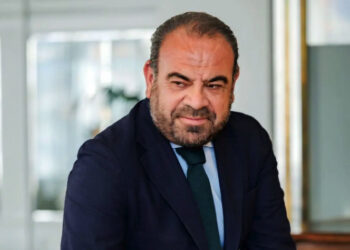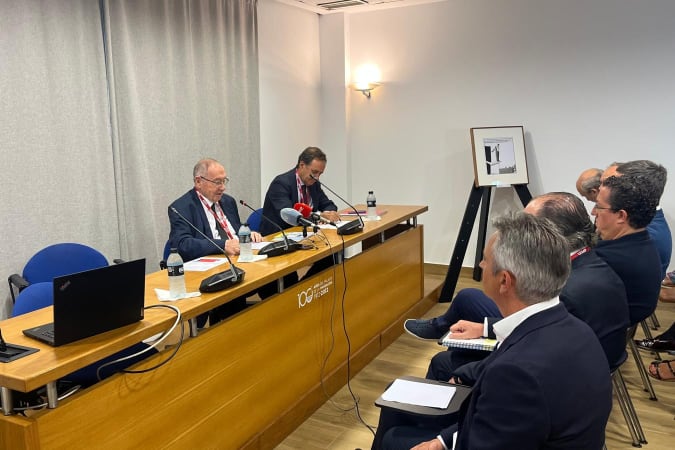
The president of the Chamber of Commerce of Spain, José Luis Bonet, defended this Monday the open strategic autonomy as the axis of the European response to the new international context, marked by geopolitical tensions, technological rivalry, and the reconfiguration of global value chains.
Bonet intervened in the inauguration of the course “Spain in a new Europe”, which takes place from July 6 to 10 at the Santander campus of the International University Menéndez Pelayo (UIMP), sponsored by the Chamber of Spain.
According to Bonet, Europe must strengthen its capacity to reduce dependencies in critical sectors such as energy, defense, artificial intelligence, semiconductors, or essential raw materials, but without renouncing its traditional vocation for economic and commercial openness: “autonomy cannot be confused with withdrawal, protectionism, or isolation.”
Bonet also stated that Spain is called to play a central role in the construction of this new Europe. In his opinion, the strength of the Spanish external sector, the adaptability of its companies, and its growing international presence place the country in a privileged position to contribute to a stronger, more innovative Europe connected to the world.
In this regard, he appealed to the protagonism of the Spanish business fabric, especially SMEs, to seize the opportunities of this new stage; “Spain must be at the center of that response. And Spanish companies, with their adaptability, international vocation, and commitment to progress, must be the protagonists of that new Europe.”
After the opening, the first conference, on “The EU in a context of global confrontation”, was delivered by Óscar Arce, Director General of Economics of the European Central Bank.
The first day of the seminar also included a dialogue with Carlos LLano, chief professor of Economic Analysis at the Autonomous University of Madrid, and moderated by Rafael Myro, emeritus professor of Applied Economics at the Complutense University of Madrid and co-director of the course.
Alongside Myro, the course is co-directed by Gonzálo Solana, director of the Nebrija Santander Chair in Business Internationalization, and the secretary of Raúl Mínguez, director of Studies of the Chamber of Commerce of Spain.
Over the course of a week, and with a practical approach that combines the academic dimension with the institutional and business aspects, the seminar will analyze some of the main challenges facing Spain and the European Union in areas such as competitiveness, strategic autonomy, international trade, and innovation.
This is the fifth consecutive year that the Chamber of Spain promotes a seminar on internationalization at UIMP, aiming to analyze and discuss the profound transformations of the international economy and the European environment.