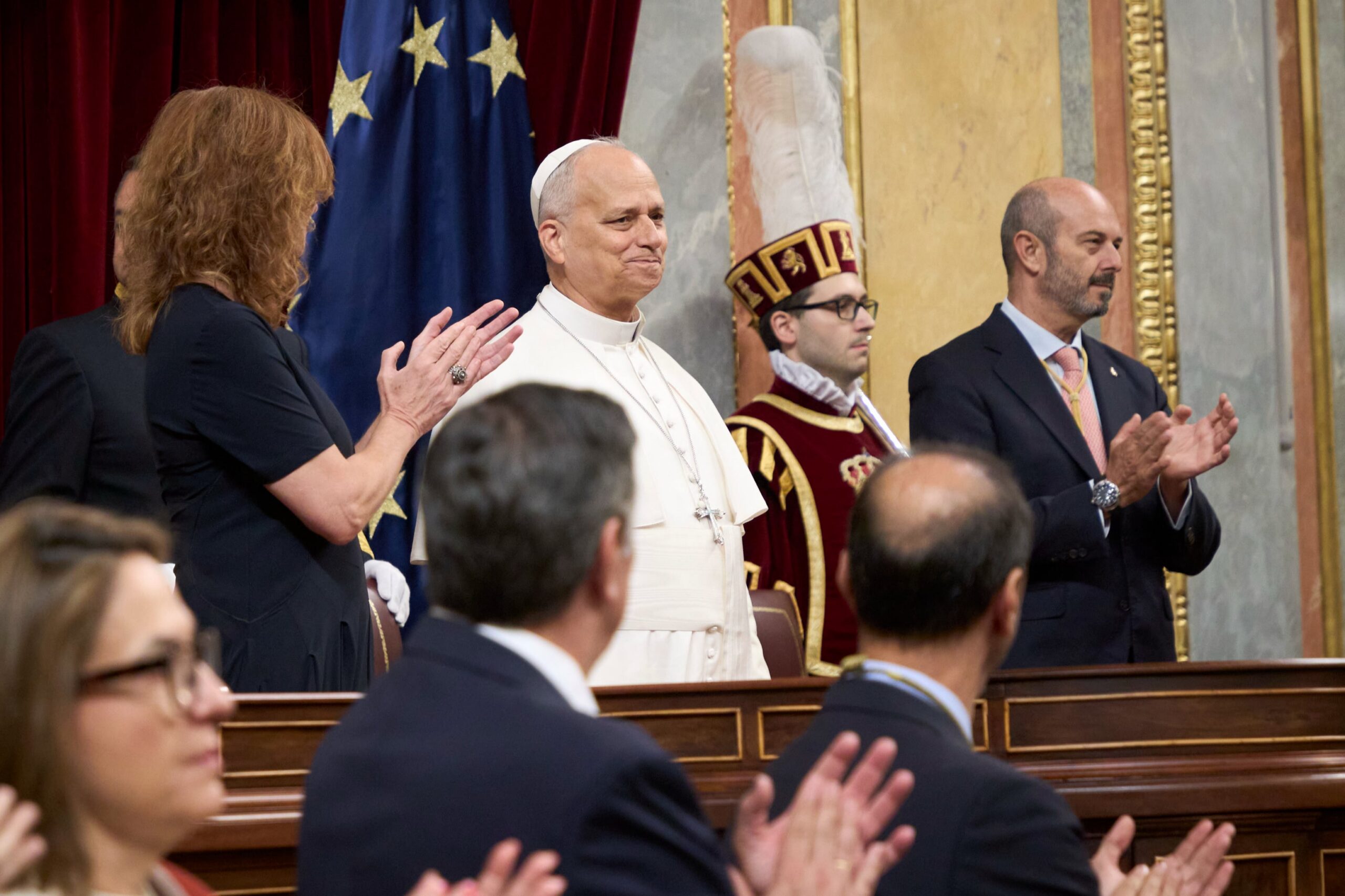
“The law must serve the good; justice must set limits to force; power needs legitimacy; the poor fully belong to the community; the foreigner must be welcomed according to their dignity; and human life can never be treated as a commodity,” said the pope during his speech before the General Courts. At the end of his speech, applause and general agreement from the entire political spectrum followed his words.
In just over half an hour, the pontiff made it clear that understanding and applying the word “dignity” in all its meaning is essential if one wants to build a just and balanced society. And he specified that “dignity, justice, and the common good must be the measure of social relations, both at the national and international levels.”
And at this point, he referred back to 16th century Salamanca, where what he called “one of Spain’s great legacies was forged: having united historical action with the clarity of moral reason.” A contribution, he added, “shared by the international community that continues to ask how to build peace based on the recognition of the person and not on the imposition of force.”
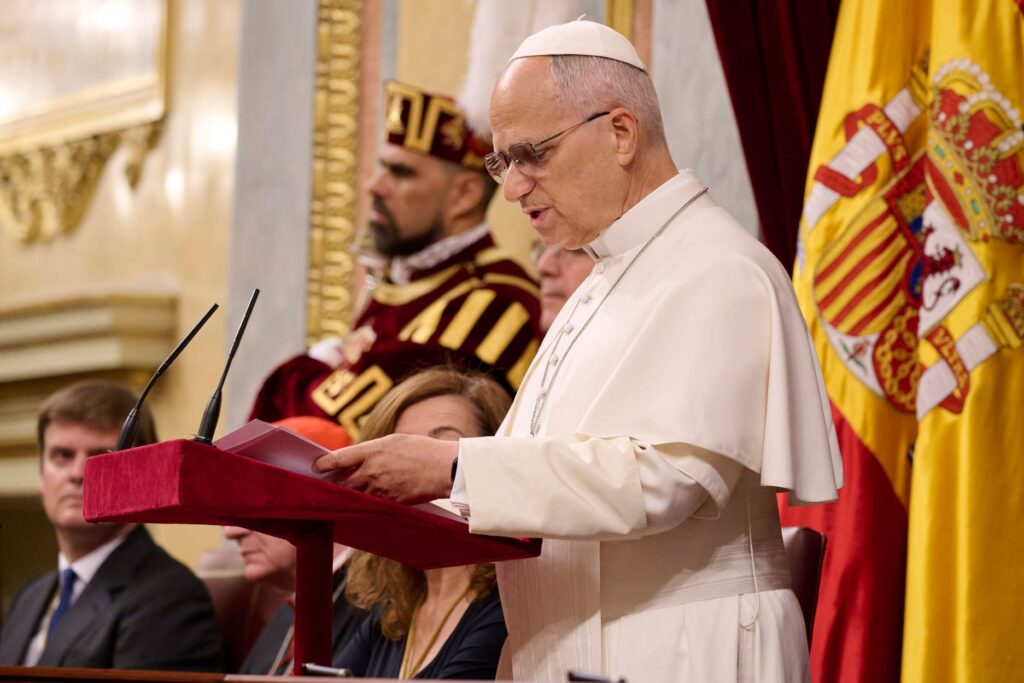
León XIV brought that moral debate posed by the jurists and ecclesiastics of the Salamanca school to current times, to emphasize that “today, the new worlds that open before us are no longer drawn on maps: they unfold in technology, in the economy, in biomedicine, and in the digital universe, where human power reaches increasingly delicate areas of personal and social life.”
And for this reason, he warned that while progress offers admirable possibilities, “technology in itself is not neutral because it takes on the face of those who conceive it, finance it, regulate it, and use it.” Therefore, “in the face of the transformations of our time, our discernment must focus on what place the human person occupies in our decisions, and how today, in a new way, the dignity of work, solidarity, social policy, and the common good are posed,” he concluded.
León XIV stated that “every authentically just society is built on the recognition of the inviolable dignity of the human person” and warned that its coexistence “can be threatened by the culture of discard.” In light of this, he asked: “Can a community that leaves in the shadows the unborn child, the elderly, the sick, those who suffer in silence, or those who depend entirely on the care of others be called fully just?
The pontiff made a strong defense of all human life “which must be recognized and safeguarded from its conception to its natural end, in every circumstance of its existence” and lamented “the tragic migratory drama, which today challenges the conscience of nations and the ethical foundation of the international order.”
The pope criticized, without naming them, those positions that reject the welcome of migrants. “Wherever a person is discriminated against because of their national, ethnic, religious, or linguistic origin, or because of their economic or social condition, the universal principle of the equal dignity of all human beings is severely violated.”
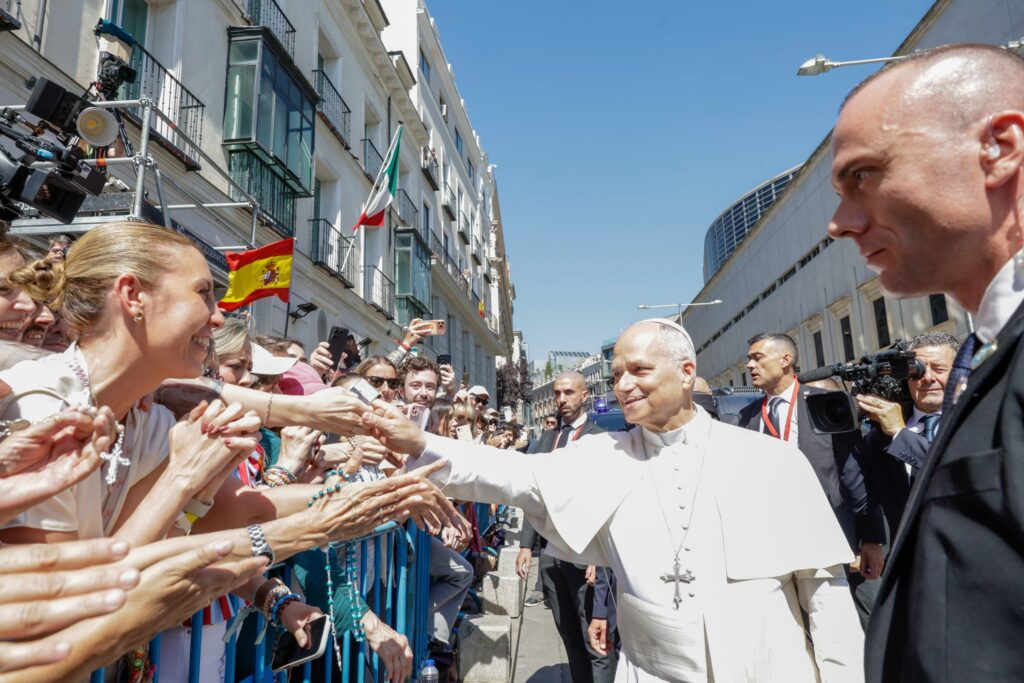
For this reason, he called for “a response that looks at people, addresses the causes that force them to leave, and goes beyond mere management of flows” and “strengthen prevention, rescue, and assistance to victims, especially within the framework of regional and multilateral cooperation.”
After warning that “the world is going through a profound spiritual and cultural crisis, which manifests itself in multiple forms of violence, polarization, and mutual distrust,” Robert Prevost emphasized that “on the international level, peace requires diplomatic courage, ethical responsibility, and a vision of the future based on respect for the identity of each people and the obligation of States to resolve their controversies through the peaceful means offered by international law.”
He concluded by stating that “the development of new technologies and artificial intelligence in the military field requires rigorous ethical oversight, so that decisions about life and death are never offloaded onto automatons nor removed from the moral responsibility of the human person.”