The next NATO summit in Ankara —July 7 and 8— must shed light on a profound strategic reconfiguration of the Alliance in the face of new challenges, fundamentally on its eastern flank due to Russia’s war against Ukraine, as explained by its Director of Security Policy, Carmen Romero.
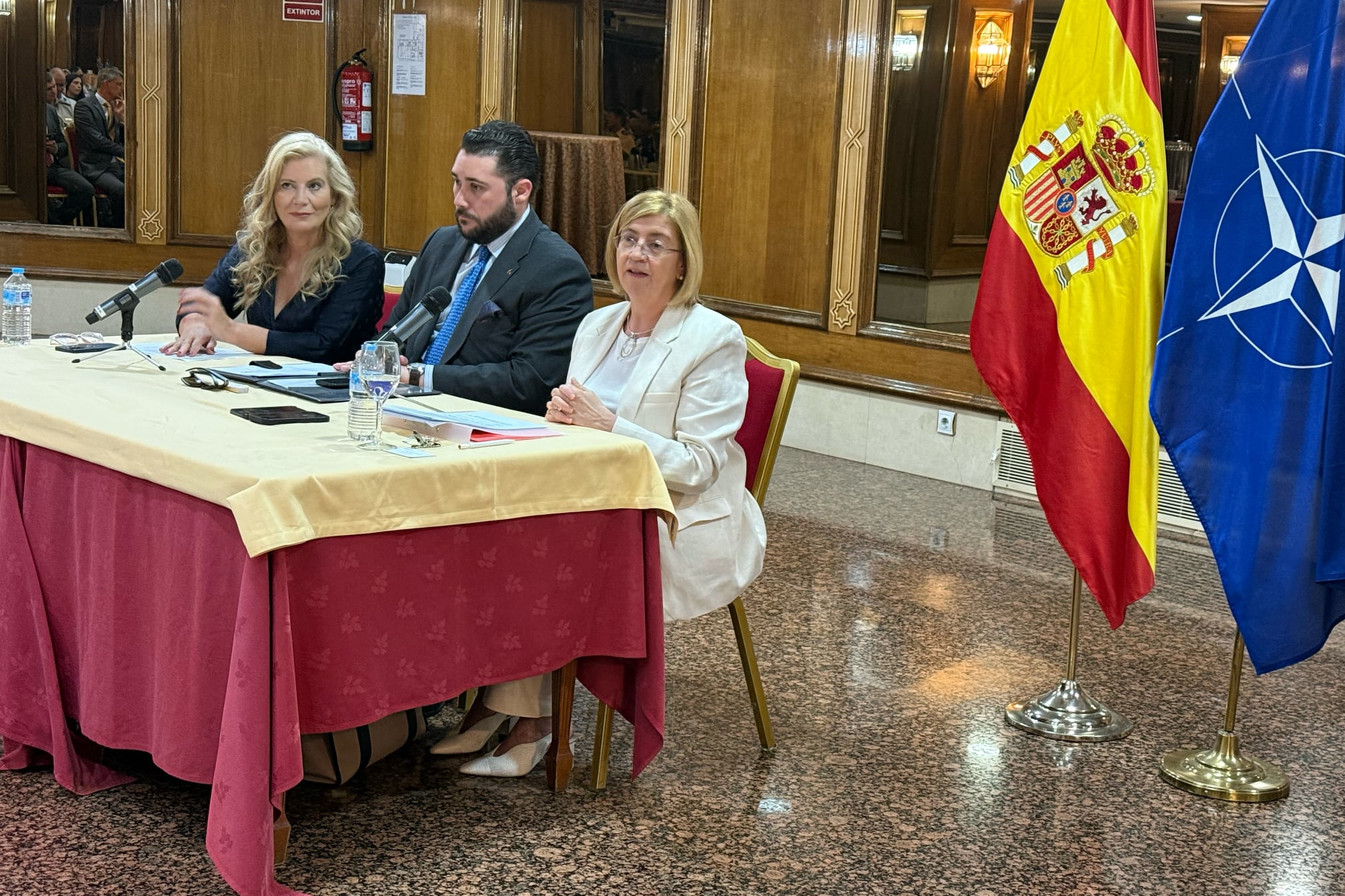
During the informational breakfast ‘NATO Political Priorities’ —organized by the Diplomatic Forum of the Principality of Asturias in collaboration with National Security Strategic Cooperation (CESN) at the Military Residence Alcázar in Madrid—, Romero said that, at the summit that will take place in the Turkish capital, the leaders of the Alliance will have to focus on how to use the agreed increases in contributions established at the Hague summit in June 2025.
That commitment to reach 5% defense spending agreed upon by the allies “has been an exercise of responsibility by European countries and Canada, who have taken on a greater involvement,” Romero said in defense of the recent demands from the United States for other NATO members to take on a larger share of the military budget.
However, the NATO Director of Security Policy emphasized that this, which may be perceived as a disagreement between the United States and its partners, in no way questions the existence of NATO, which remains the guarantor of the security of more than 1 billion people.”
“After the political agreement in The Hague to increase contributions, we now have to transform that money into military capabilities,” said the NATO Deputy Secretary General before warning that “it is not enough to simply announce that we are going to contribute that money; allies must now focus on how we are going to use it.” And in this regard, she clearly advocated for developing greater technological capacity against drones and missiles, among other lines of research.
Romero later referred to a fundamental aspect by emphasizing that for NATO it is essential to end the fragmentation of the defense industry in the European Union. In this context, she stated that “Mark Rutte wants Ankara to be the platform where contracts are signed that allow Europeans to start visualizing the dividends of having a defense industry of their own.”
Carmen Romero, among other topics to be addressed at the Ankara Summit, mentioned that the leaders of the 32 member states will once again show strong support for Ukraine and strengthen the alliance with “like-minded partners” referring to countries in the Asia-Pacific region, such as Australia, New Zealand, and South Korea, in contrast to those she considered “competitors,” such as Russia, China, North Korea, or Iran.
“Individually they are just a challenge, but when they work together they become a threat” whose main problem is Russia “which allocates 40% of its budget to military spending and shows no signs of changing.” Regarding the issues, she highlighted that China is modernizing its military capacity without transparency; “North Korea is learning from its support for Russia in Ukraine”; and Iran “maintains its support for Moscow, as it has until now.”
If anything has demonstrated the Atlantic Alliance, it is its capacity for adaptation, since it was founded in 1949. Romero recalled that “it did so during the Cold War, during the years when it was thought to build the security of the continent with Russia and when the war against Ukraine broke out, “It is time for allies to launch NATO 3.0,” she concluded.