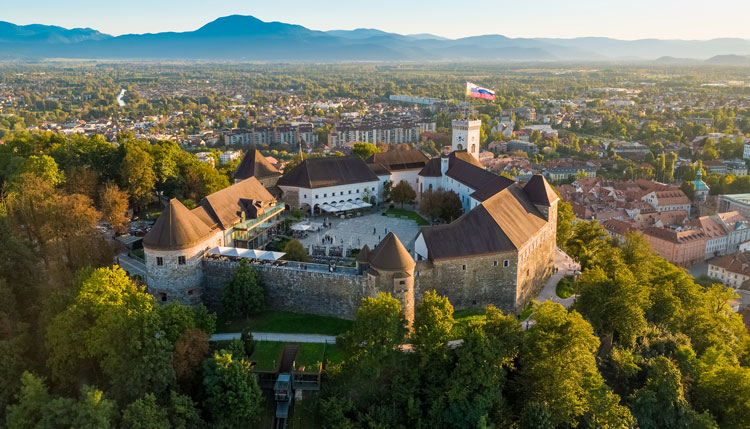
Slovenia (officially: Republic of Slovenia) is a green country located in the heart of Europe: between the Alps and the Adriatic Sea. It shares borders with Italy, Austria, Hungary, Croatia, and the Adriatic Sea. In terms of its political system, Slovenia is a democratic republic where just over two million people live.
The official language is, of course, Slovenian, although in ethnically mixed areas, Italian and Hungarian also have official status. It is a country with exceptional natural wealth and a dynamic economy that, as a proud member of the European Union, is committed to international cooperation.
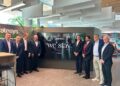
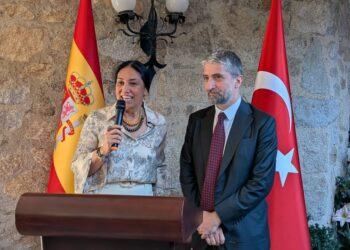
Today, June 4, the Embassy of the Republic of Slovenia in Madrid is organizing a solemn reception on the occasion of the Independence Day, which is celebrated in the country on June 25. This date was chosen because on June 25, 1991, Slovenia transitioned from being one of the six republics of Yugoslavia to being an independent country.
Due to its location, Slovenia’s history has been a special meeting point between various cultures, powers, and ideas since prehistoric times, through the era of Ancient Rome, up to the present day. From a linguistic perspective, one of the most important periods was undoubtedly the Reformation, which specifically promoted the emergence of the written Slovenian language, printing, and literacy.
The 19th century brought significant changes to Slovenia, just as it did to the rest of Europe, both in terms of modernization and political order. However, the true turning point was World War I and the subsequent dissolution of the Austro-Hungarian Empire.
The events that occurred during World War II are of particular importance to the modern history of Slovenia: the territory was occupied and liberated only in 1945. At that time, Slovenia became part of the Socialist Federation of Yugoslavia. In the 1950s and 1960s, Slovenia experienced accelerated industrialization and urbanization. The countryside gradually depopulated, cities and industrial centers expanded, new urban developments emerged, and transportation and municipal infrastructure were modernized. In the 1980s, an economic and political crisis occurred that led to the disintegration of Yugoslavia in the 1990s.
In April 1990, the first multiparty elections were held in Slovenia after World War II. The government was formed by a coalition of new parties, DEMOS, which subsequently organized a plebiscite on Slovenia’s independence on December 23, 1990. With a high turnout (88.5% of all voters), 95% of those who went to the polls voted in favor of Slovenia’s independence. On June 25, 1991, the Assembly approved the fundamental documents of independence, and on June 26, independence was proclaimed.
Today, 35 years after this proclamation, Slovenia is a small but dynamic country that encompasses a very diverse history. Since May 1, 2004, it has been a member of the European Union and, since January 1, 2007, is part of the eurozone. The Slovenian economy today primarily focuses on exports, which, of course, is supported by an active trade policy and economic diplomacy. This country is also among the most industrialized in the EU: among the main industrial sectors of the country are, without a doubt, the automotive industry, mobility, information and communication technologies (ICT), healthcare, machinery and metal processing, electrical and electronic industries, carpentry and furniture manufacturing, as well as food and beverages. Additionally, R&D and sustainable development stand out.
In the economic sphere, cooperation between Slovenia and Spain is particularly positive. According to the latest data, Spain ranks fifteenth in terms of trade exchange with Slovenia: in 2025, Slovenia exported goods worth 822 million euros to Spain and imported goods worth 837 million euros from Spain. Among the main fields of goods exchange between the two countries are electrical machines and devices, vehicles (except for rail or tram vehicles) and their parts, mineral fuels, oils (and their derivatives), and pharmaceuticals.
Moreover, tourism is gaining increasing importance in Slovenia and is increasingly leaning towards sustainable development within this sector. Since 2007, this small republic has been presenting itself both nationally and internationally with the brand “I feel Slovenia,” which reinforces its recognition and reputation.