Yesterday Wednesday, the European Commission adopted two specific strategies, one for the islands and another for the coastal communities of the European Union, which for the first time establish a coordinated European approach to support these territories and unlock their long-term potential.
The two initiatives introduce a specific approach, tailored to the concrete needs and unique challenges of the 17 million people living on more than 4,000 islands in 16 EU member states; and the 95 million people living along the 70,000 km of coastline of the EU and in coastal areas of 22 EU member states.
The Commission proposes a coherent and holistic approach that addresses the economy, connectivity, energy, the environment, demographic aspects, and security in an integrated manner, aiming to transform the challenges faced by these territories into long-term opportunities and strengths. This includes ensuring that their specific needs are fully reflected in future proposals and aligned with the broader priorities of the EU.
Most of the EU’s islands share common challenges that affect their economic sustainability and quality of life, such as geographical isolation, limited connectivity, high transport costs and long travel times, small and fragmented markets, excessive dependence on tourism and fossil fuels, climate vulnerability, demographic decline, water scarcity, limited access to essential services, and other additional costs arising from insularity.
At the crossroads between land and sea, Europe’s coastal communities represent a vital asset. They combine a rich environmental, cultural, and maritime heritage with great potential to drive a sustainable blue economy. At the same time, these coastal communities are on the front lines against climate change, the loss of marine and coastal biodiversity, and marine pollution, which affect their resilience and long-term economic growth. Some communities also face additional pressures, such as unbalanced tourist flows, a shortage of affordable housing, seasonality of economic activity, and limited job opportunities, leading to youth emigration and economic instability.
This is why a tailored approach is essential. The two strategies work in tandem, mutually reinforcing each other to address shared pressures while responding to the unique realities of both islands and coastal communities.
In light of these interrelated pressures, the EU has developed the two complementary strategies to create a coherent framework within existing policies and funding, with a view to strengthening economic opportunities, quality of life, and resilience.
A forward-looking strategy for the islands of Europe
The strategy aims to integrate the needs of the islands and reflect the challenges they face in broader EU policies tailored to their specific needs. It is structured around four main pillars:
– Economic development, connectivity, competitiveness, and innovation: fostering entrepreneurship, diversifying local economies, promoting sustainable tourism, and digitalization, while addressing connectivity deficiencies that limit economic activity and life on the islands.
– Energy security, environmental protection, and resilience to climate change: accelerating decarbonization and the deployment of renewable energy, climate change adaptation, and biodiversity protection.
– Communities and demographics: strengthening public services, healthcare, housing, education, and social inclusion to curb depopulation and retain young people.
– Security and crisis preparedness: enhancing resilience to natural disasters linked to the climate crisis, maritime risks, and other emerging threats.
The strategy promotes the establishment of a periodic dialogue between EU institutions and stakeholders representing the interests of the islands, as well as various technical support measures, including capacity building and the exchange of best practices. Member States are invited to include specific measures for the development of the islands in their future national and regional cooperation plans, including those related to insularity in areas such as connectivity, services, and infrastructure. Member States are also invited to propose territorial investment instruments that promote integrated strategies for the islands and facilitate better cooperation.
A strategy for prosperous coastal communities
The strategy on coastal communities focuses on three priorities:
– to boost prosperity, it promotes a dynamic, competitive, and diversified blue economy, fostering innovation, new business models – such as fish tourism, bioeconomy, and marine renewable energy – and creating high-quality job opportunities;
– to strengthen resilience, it improves adaptability to climate change and other broader environmental, economic, social, and security challenges, particularly through the implementation of the recently launched OceanEye initiative;
– to enhance livability, it encourages the creation of dynamic, inclusive, and attractive spaces where people of all ages can thrive by working, living, and enjoying their surroundings, while safeguarding maritime culture, heritage, and local identity.
The strategy emphasizes tailored solutions and local initiative, recognizing the diverse needs of coastal communities, from remote fishing villages to large port cities.
The main measures include:
1.- Empowering coastal communities in maritime spatial planning through the upcoming Ocean Law, promoting the sustainable use of the ocean’s natural capital, fostering climate change adaptation, and unlocking sustainable growth opportunities;
2.- Supporting blue bioeconomy clusters and supply chains in coastal areas through community-led local projects, as part of the future EU blue bioeconomy innovation initiative;
3.- Developing a certification system for blue carbon credits to create new opportunities for blue economy services and coastal community revenues;
4.- Boosting resilience to climate change by increasing risk assessments, mapping investments, and capacity building for coastal adaptation, with the involvement of the European Investment Bank and through EU missions on climate change adaptation and restoration of our ocean and waters.
General context
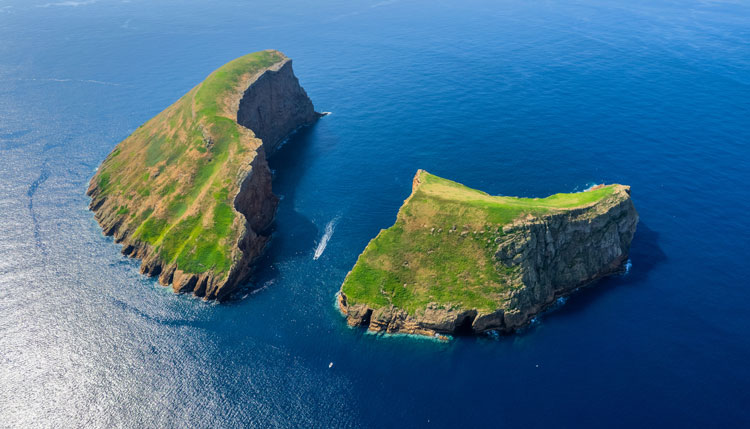
In the EU, there are more than 4,000 inhabited islands in 16 member states, including the three island nations of Cyprus, Ireland, and Malta, where about 17 million people live. These islands are a vital part of the identity, economy, history, and cultural heritage of the EU.
The EU Strategy for the Islands is based on extensive public consultation, including contributions from stakeholders to a data call, as well as input from the European Parliament, the Committee of the Regions, the European Economic and Social Committee, and island communities, which have long advocated for a specific political framework.
On the other hand, 95 million people (21% of the EU population) reside along the 70,000 km of EU coastline or in coastal areas of 22 member states. The EU Strategy for Coastal Communities was also based on a public data call, ensuring that local opinions influenced its development.
Both strategies are in line with the European Ocean Pact (launched in 2025) and complement broader EU policies on climate action, cohesion, and sustainable development. However, the EU’s outermost regions are not covered by these proposals, as they are addressed in a separate specific strategy, recognizing their unique status under Article 349 of the Treaty on the Functioning of the European Union. That strategy will be presented later this year.