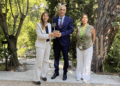
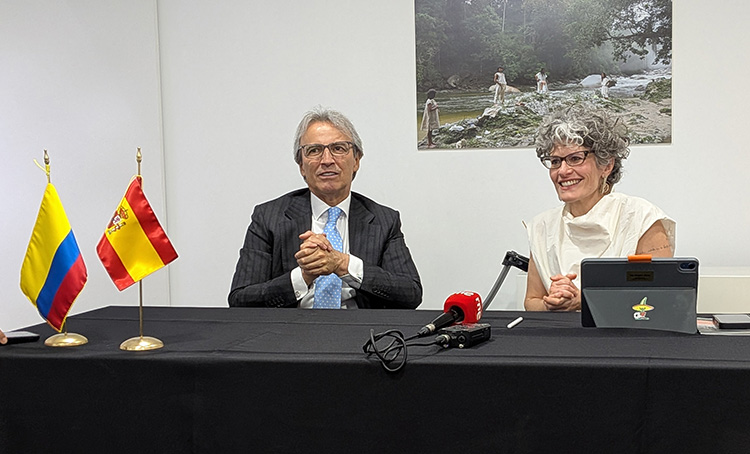
In a meeting at the Colombian Embassy, the Deputy Minister of Heritage, Memories, and Cultural Governance, Saia Vergara, made a thorough and detailed summary of the numerous provisions and new laws that the government of President Gustavo Petro has initiated to heal the wounds of the past suffered by the peoples victimized by the conflict.
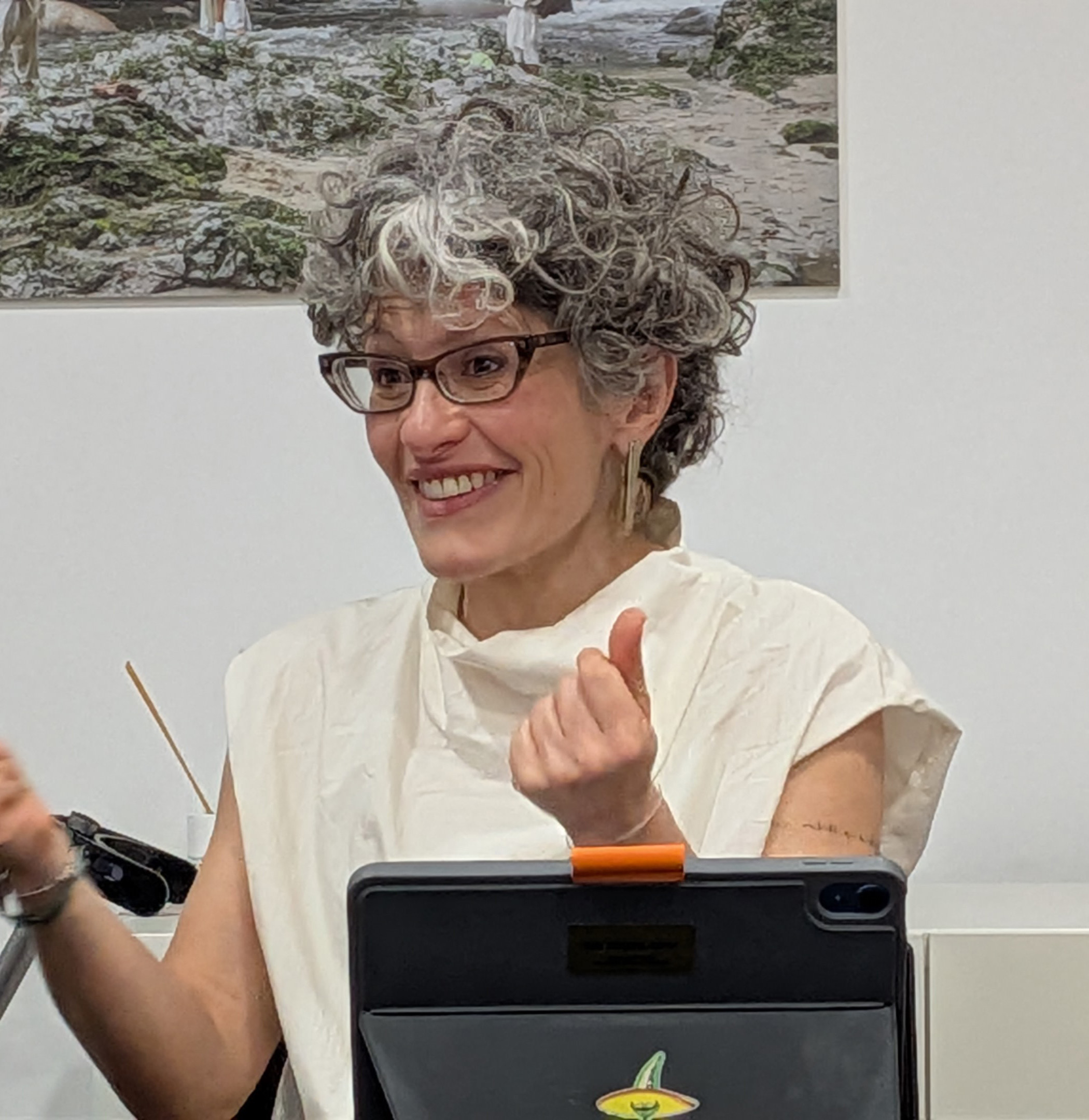
“Let’s say that memory is a stage of dispute.
And the institution, the institutional framework always tends, let’s say, to monopolize the narrative of memories.
That is what we know as the official history,”
said Deputy Minister Saia Vergara.
The Deputy Minister pointed out that with the “progressive government of Gustavo Petro, we began to place at the center of our action and the public policies led from our deputy ministry the voices of communities that had historically been excluded. And we refer to ancestral peoples, indigenous peoples, but also to Afro-descendant, raizal, black, and parintero peoples, and to the peasantry.
“Those voices began to be part of the action, of the action and of the plans and programs and projects,” continued Saia Vergara, “and of course of the investment. Because one can talk about reclamation, one can talk about the decolonization of narratives, one can talk about allowing other voices, but if one does not invest, if one does not allocate budgets to those projects, it remains in demagoguery. President Petro doubled the budget we historically had in the Ministry of Cultures with previous governments and we were able to finance several programs and projects associated with this reclamation of memories that we can call ‘subaltern’, which have been subaltern until the arrival of this government, approximately between 3 and 4 million euros were invested, which may sound very little, more in the context of a European country, but from a ministry like ours that had not previously financed this type of projects, it is very significant.”
The Colombian Deputy Minister emphasized that after 10 years of the signing of the peace agreement with the FARC, “that agreement laid the foundations for various actions associated with truth, justice, reparation, and guarantees of non-repetition. Among the institutions that were created, temporarily there was the Commission of Truth, and that commission traveled throughout the country interviewing people associated with the conflict, victims and survivors of the armed conflict in Colombia, and from that report collected many testimonies, a number of recommendations emerged, and also the Special Justice for Peace, which is now threatened with disappearance or wants to disappear, which has been so fundamental for the reclamation of victims.”
Saia Vergara highlighted the creation during this government of a sentencing committee that organized the entire universe of sentences that the State had and began to work with different communities. Likewise, the defense of the approximately 70 different languages spoken in Colombia falls under her Ministry, along with museums, libraries, the General Archive of the Nation, and the Carlos Cuervo Institute, which is responsible for safeguarding the linguistic heritages of our country. Regarding this, the Deputy Minister pointed out that “the investment that has been made is not only strictly addressing the recommendations of the Commission of Truth, the judges who have condemned the State or the international instances, but also we have addressed those memories that are preserved in the languages through a National Language Plan 2022-2032, with which we have also been working on self-diagnoses, the Health Status of those languages, and so on.”
“We have held several meetings among victims from different places, and we have realized that there are many survivors and victims of the armed conflict or ancestral peoples who have similar experiences associated, for example, with massacres that are terrible topics but circulate in our country due to that long conflict and whose experiences can be shared. Experiences of healing, of reparation of cultural damage, etc. So what we have tried from a very innovative perspective of management and relationship with memories is to bring them together, to allow them to meet so that there is an exchange of experiences in a horizontal manner, peoples that would never think they could meet, peoples from the Pacific with the Caribbean or from the South, from the Amazon with the Center. And we have held several meetings and exchanges, which we have called Meetings for Memory, Dignity, and Hope because what we want is evidently to contribute to having a horizon to look at always, beyond the pain,” said Saia Vergara.
The Deputy Minister pointed out the creation of inventories of intangible cultural heritage, which identify expressions, objects, and places of memory, obviously all focused on building peace. We have worked with people from certain populations who experienced massacres and are undergoing reparation processes through topics associated with intangible cultural heritage. These inventories have also been made with a gender focus and among youth. “And this is very important,” she pointed out, “because as I said, it is not only that this change government set out to make those voices visible, but the approach is totally horizontal. The institution is not the one that comes with the arrogance typical of academics who work in institutions. ‘I am going to teach you how it is that according to a certain oath of such, a Frenchman, memory must be worked on. I am the one who knows and besides I am the one who puts up the money.’ This government starts from innovation in the treatment of memories from that horizontality with survivors and victims. And what the institution does is provide the tools and means for the communities themselves to say how they want to be repaired. Because no one better than them to understand those processes.”
Deputy Minister Vergara also highlighted the work that the Petro Government has carried out regarding the reparation of cultural damage with ethnic communities that have been victims of the conflict. To this end, she referred to what happened on May 2, 2002, in Bojayá, where approximately 80 people died (including 48 minors) after FARC guerrillas launched a cylinder bomb during a confrontation with AUC paramilitaries against the Bellavista church, where the population was taking refuge. “A confrontation that the authorities knew about. When the people arrived to assist, the Christ was left, it was on the altar, it was mutilated from its extremities and the Virgin, without a little hand, and from then on, that Christ and that Virgin became a symbol of resistance and resilience and re-existence of that people who also had to flee, had to be displaced, and so on. 24 years have passed and the State is going to ask for forgiveness under the government of our president Gustavo Petro. On July 11, it will go to ask for forgiveness with all the Armed Forces because these are truly tragedies that could have been prevented if these forces had protected the population.”
Finally, in this area of actions, the Deputy Minister referred to the officially recognized genocide of the political party Unión Patriótica. “Between the 80s and 90s, it was persecuted by the State despite being a legal party and six thousand of its members were murdered. The Colombian State was condemned by the Inter-American Court of Human Rights and it was termed a genocide. We are working with women to make a documentary, Survivor Women Militants of the UPE.
To conclude, Saia Vergara briefly referred to “an exhibition based on the findings of the Commission of Truth, called There is a Future, If There is Truth, because we understand the need to educate so that new generations understand the country in which they live and understand, when they participate, to decide with knowledge of the country in which they live.”