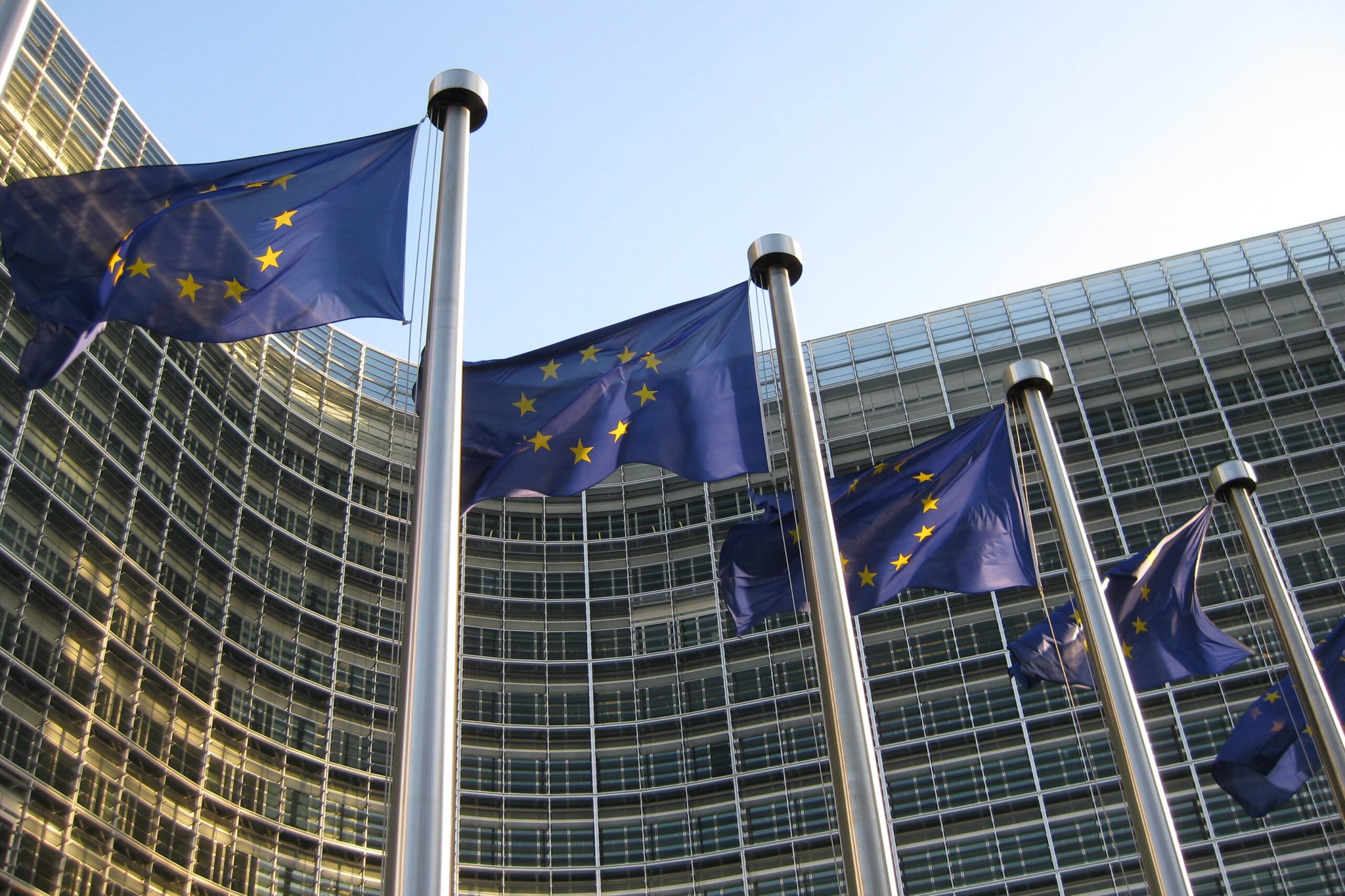
As Secretary of State for the European Union (2009-2013), I had as a colleague the Italian Federica Mogherini, who was later appointed High Representative of the Union for Foreign Affairs (2014-2019). She launched the idea of ‘strategic autonomy’ as a goal of European security and defense policy. A fertile idea, which has subsequently spread to the major policies that appear on the horizon of the European project.
The Union, formerly called the European Community, was born in 1957 for the peace of the continent after the two world wars, and as a single market, an agricultural policy, and later, a monetary policy. In the 21st century, new objectives have emerged, requiring new mechanisms for their implementation. I will refer to both.
The objectives
The European Union is engaged in a triple transition: digital, ecological, and social. A digital transition, now dominated by the United States and China, which is even more strategic following the widespread application of Artificial Intelligence, with disruptive effects on the economic and labor world.
An ecological transition, on which the development of our civilization depends. The war initiated by the United States against Iran, which has driven up the price of fossil fuels, is the best proof of the imperative need to comply with the Paris Agreement, and to move towards a decisive decarbonization of the economy and a firm commitment to clean and renewable energies.
The third major transition is social. The social pillar is the gap that the Union must fill so that the crown jewel of the Western world, the Welfare State, does not devalue in the face of an oligarchic drift of financial capitalism, and an evolution towards polarization and extreme inequality. The Union was not designed to carry out social policy, which remains the responsibility of the States.
Defense and security have gained a presence on the international stage that was not foreseeable years ago. The geopolitics of superpowers and their spheres of influence, and the evident weakening of the transatlantic bond and NATO, have forced the Union to undertake a serious reflection on the need for Europe to finally have a serious defense policy and a foreign policy, which are still in the hands of the sovereignties of the States. This implies developing a truly European military industry, and starting to think about a European army.
The instruments
None of the above would be possible if the Union did not equip itself with the political, economic, and institutional mechanisms that allow for the decisions needed to fulfill the main objectives we have just outlined.
The Union must approve a Budget for the period 2028-2035 that finances the ambitious objectives for which the community power structure is to serve. 1% of European GDP is not enough. It would be necessary to reach 2%, but I fear it will fall far short of that amount. In any case, a substantial budget increase would be essential.
Two effective fiscal instruments are required to execute a Budget that increases its amount: joint debt and an extraordinary tax on large fortunes, perhaps the so-called Zucman tax or the minimum 15% tax on the profits of large corporations, agreed upon by the OECD and boycotted by Donald Trump.
There is an institutional change that seems necessary to achieve the objectives of strategic autonomy. I refer to the enormous obstacle that the necessary unanimity for approving the main aspects of these policies constitutes for decisions in foreign and defense policy. The Union must address a reform of the treaties that dilutes the veto in such policies.
Here lies the fundamental problem of strategic autonomy. In my opinion, a way out of this obstacle would be the signing of a Treaty on defense policy by the countries that wish to do so, without the vote by unanimity, and with a ‘superqualified’ majority. That treaty could allow the entry of countries that are not in the EU but are as important as the United Kingdom, Norway, or Iceland. And it is also the most appropriate for an enlargement that, after Russia’s invasion of Ukraine, can no longer wait.