Diplomacy News
es Español en English
14 de Aug, 2026
No Result
View All Result
  • Current Affairs
    • Business
    • Diplomacy
    • Geopolitics
  • In Depth
    • Interviews
    • Reports
    • Research
  • Life
    • Culture
    • Gastronomy
    • Tourism
  • Opinion
  • Agenda
  • Who is Who
  • DiplomacynewsTV
NEWSLETTER
Diplomacy News
NEWSLETTER
Diplomacy News
No Result
View All Result

The Italian Republic is 80 years old and enjoys good health

Italian democracy was built on the sacrifice and suffering of past decades: fascism, war, civil fracture…

Ricardo Ruiz de la Serna by Ricardo Ruiz de la Serna
2 de June de 2026
in Diplomacy, Opinion
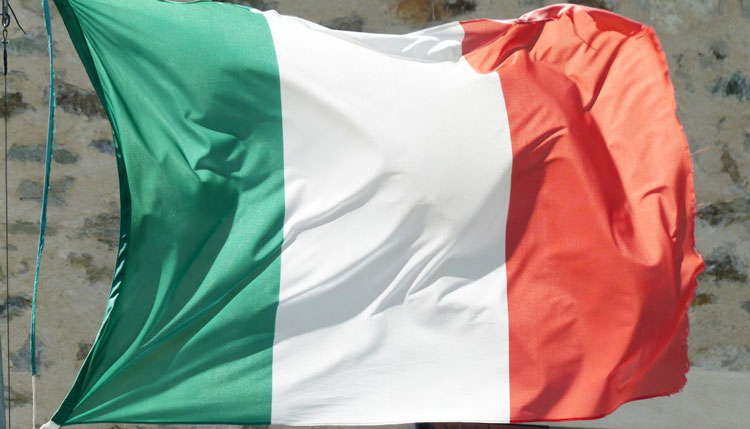
Italian Republic turns 80

Italian Republic turns 80

This year 2026, Italians and friends of Italy are celebrating. The Republic is turning 80 years old and is in excellent health. On June 2, 1946, in a war-torn Italy that had just ended a year earlier, elections were held for the constituent assembly, the first step in the process that would lead to the Constitution of 1947, which came into effect in 1948. At the same time, a referendum was also held to decide the change from a monarchy to a republic. This second option won with more than 54% of the votes.

This transformation of Italy marked the course of the country in the post-war period. It was a true break with fascism and, in this sense, Italian democracy was built on the sacrifice and suffering of the past decades: fascism, war, civil fracture… Italy looked to the future to overcome the past. The elections and the referendum symbolized that change: it was a national vote in which women fully participated, and one could speak of a fully modern citizenship. The republic represented – and still represents today – for many Italians the beginning of a democratic era after authoritarianism and the world conflict and is a symbol of national unity and citizen participation.

It was also a time of seeking reconciliation and understanding. The Republic and the constitutional order would arise from the commitment between Christian democracy, socialists, communists, liberals, and republicans. It was a true commitment to national reconstruction without anyone being able to claim a monopoly on patriotism. In the reconstructed Italy, individual rights, social rights, the parliamentary system, and limits on power that had been disappearing in the previous decades would coexist.

“Italy is a democratic Republic founded on labor,” states Article 1 of the Constitution approved by the Constituent Assembly on December 22, 1947. The country would be the epicenter of the great labor and union struggles of the Cold War years. The dignity of the human being, realized in work, citizen participation, and workers’ rights would be at the center of political and union debates in the years to come. To this day, the social issue – precariousness, youth, migration, territorial inequality, and the crisis of the social state – remains at the heart of political life.

It was not enough to declare that all citizens are equal. Article 3 requires “the removal of economic and social obstacles that, by limiting the freedom and equality among citizens, impede the full development of the human person and the effective participation of all workers in the political, economic, and social organization of the Country.” From there, discussions in Italy must address gender gaps, north-south inequality, or access to education, housing, and healthcare.

The republican order will distrust centralized power. A strong Parliament, a President of the Republic as a guarantor of the constitutional order, a Constitutional Court, judicial independence, regional autonomies, and the aggravated procedures for reform will give the republican Constitution enormous solidity.

The Italian republican system today represents the best of the European legal tradition after World War II: pluralism, social rights, the parliamentary republic, Europeanism, judicial independence, limited power, and so many legal and political institutions that have given the country the conditions for development and prosperity that have placed it in 8th place worldwide by nominal GDP and among the great European powers alongside Germany and France.

Tags: ConstitutiondestacadafeaturedItalian Republic
Ricardo Ruiz de la Serna

Ricardo Ruiz de la Serna

Profesor de Historia del Mundo Actual en la Universidad San Pablo-CEU

Related Posts

Prime Minister Shri Narendra Modi, together with Prabowo Subianto, the president of Indonesia, visited the Temple Complex of Prambanan, a UNESCO World Heritage site, in Yogyakarta (Indonesia). /Photo: Courtesy of the Embassy of India
Opinion

August 15: The living civilizational ties between India and Southeast Asia

by Amish Tripathi
14 de August de 2026

For millennia, the ideas, the epics, and the aesthetics of Indian civilization have accompanied pilgrims and traveled with merchants to...

Read moreDetails
A cruise ship in Malaga./ Photo: Aitormmfoto / iStock

Diplomacy on the High Seas: Cruises as Stages of International Relations

14 de August de 2026
Spanish contemporary art in European embassies with ‘la Caixa’ Foundation

Spanish contemporary art in European embassies with ‘la Caixa’ Foundation

13 de August de 2026
The green transition has gone from being understood as an environmental policy only to becoming a strategic factor of competitiveness, resilience and innovation for organizations. /Photo: Applus+

Legal resilience in the ecological transition: law in transformation

11 de August de 2026
Paulina Estrada, the new Central Consul-General of Colombia, and David McFarlane, the new Minister Counsellor at the UK Embassy

New appointments in the embassies of Colombia and the United Kingdom

10 de August de 2026

Lo más leído de esta semana

  • Dancing House of Prague. /Photo: IStockphoto. Vladislav Zolotov

    The Dancing House of Prague celebrates its 30th anniversary as a Czech emblem

    158 shares
    Share 63 Tweet 40
  • Diplomacy on the High Seas: Cruises as Stages of International Relations

    158 shares
    Share 63 Tweet 40
  • August 15: The living civilizational ties between India and Southeast Asia

    157 shares
    Share 63 Tweet 39
  • Colombia’s earthquake: Ministry confirms one deceased and 12 missing spaniards

    153 shares
    Share 61 Tweet 38
  • Spain invests 125,440 euros in the FAO Blue Ports Initiative

    153 shares
    Share 61 Tweet 38

Newsletter Diplomacy News

NEWSLETTER

Lo último en Diplomacy News

Prime Minister Shri Narendra Modi, together with Prabowo Subianto, the president of Indonesia, visited the Temple Complex of Prambanan, a UNESCO World Heritage site, in Yogyakarta (Indonesia). /Photo: Courtesy of the Embassy of India

August 15: The living civilizational ties between India and Southeast Asia

14 de August de 2026
A cruise ship in Malaga./ Photo: Aitormmfoto / iStock

Diplomacy on the High Seas: Cruises as Stages of International Relations

14 de August de 2026

Sections

  • Business
  • Culture
  • Current Affairs
  • Diplomacy
  • DiplomacynewsTV
  • Gastronomy
  • Geopolitics
  • In Depth
  • Interviews
  • Life
  • Opinion
  • Reports
  • Research
  • Tourism

About Diplomacy News

  • Nosotros
  • Aviso Legal
  • Política de Privacidad
  • Política de Cookies
  • Contactar
logo diplomacy news

© 2026 Diplomacy News.

No Result
View All Result
  • Current Affairs
    • Business
    • Diplomacy
    • Geopolitics
  • In Depth
    • Interviews
    • Reports
    • Research
  • Life
    • Culture
    • Gastronomy
    • Tourism
  • Opinion
  • Agenda
  • Who is Who
  • DiplomacynewsTV
  • Español

© 2026 Diplomacy News.