As part of PhotoEspaña 2026, until September 20, the Fundación Casa de México joins the celebration of the World Cup and presents the exhibition Mexico 86. The world united by a ball, the iconic series of photographs by the renowned Annie Leibovitz taken in Mexico for the 1986 World Cup.
Curated by Héctor Orozco, the public will be able to enjoy the exhibition for free, composed of thirteen photographs.
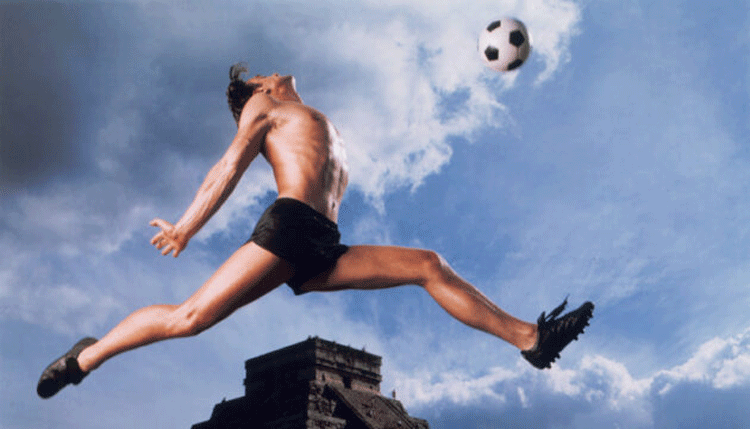
One of the most innovative aspects of Mexico 86 was the participation of the photographer Annie Leibovitz. The organizing committee commissioned her a series of images that related football to Mexico’s historical and cultural heritage. The proposal broke with the tradition of illustrated posters that had characterized previous World Cups.
Leibovitz traveled for six months across the country and took photographs at iconic archaeological sites such as Chichén Itzá, Teotihuacán, and Tula. In them, she used models to create scenes that fused the movement of football with the monumentality of Mesoamerican civilizations.
One of those images ended up becoming the official poster of the World Cup. It showed the Atlantes of Tula backlit, with a football and the projected silhouette of a player in action. It was the first time that the official poster of a World Cup was based on a photograph instead of an illustration or painting.
The campaign aimed to present Mexico not only as a sports venue but as the heir to one of the oldest cultural traditions in America.
The 1986 World Cup was held in Mexico between May and June, becoming the second World Cup organized by the country. Originally, the host would be Colombia, but its withdrawal due to economic difficulties led FIFA to choose Mexico, which already had the infrastructure and experience after organizing the 1970 tournament. Therefore, it was chosen as the host and became the first country to host two men’s World Cups.
The competition took place in a context marked by the country’s recovery after the devastating earthquake of 1985 in Mexico City. The organization of the tournament was seen as an opportunity to project an image of resilience and capability to the world.
The tournament left unforgettable moments such as the “Goal of the Century” and the “Hand of God” in the match between Argentina and England, held at the Estadio Azteca. These episodes solidified Mexico 1986 as a cultural and sporting reference in world football.